TANIWHA (2025)

When a taniwha is disturbed by construction in a small Aotearoa town, Mereana and her friends must rally to protect it. With strange mushrooms, shadowy developers, and ancient forces at play, saving their world will take courage, creativity, and heart.

Silo Theatre’s Taniwha is a joyful, imaginative production that brings Aotearoa storytelling to life in a format that is as inventive as it is heartfelt. Designed for tamariki but offering wonder for all ages, the show blends theatre, puppetry, live filmmaking, and music into a vibrant, cinematic stage event that celebrates kaitiakitanga (guardianship), friendship, and standing up for the whenua (land).

At the centre of Taniwha is Mereana, a plucky and determined young girl who discovers that a local taniwha, a guardian creature from Māori tradition, has been disturbed by ongoing construction work near her home. With her tight-knit group of friends, she takes it upon herself to protect the taniwha’s habitat. As oversized blue mushrooms sprout from unexpected places and mysterious men in suits lurk nearby, it’s clear that Mereana and her team are up against more than just diggers and deadlines. What unfolds is a high-spirited, environmentally conscious tale, told with humour, imagination, and just enough edge to keep things exciting.


The story unfolds as a live film being made in real time on stage, using cameras, sets, puppets, and clever transitions. Two camera stations operate side-by-side, enabling one scene to be built while another is performed and filmed. This allows seamless transitions between sequences, all of which are projected above the stage as a finished “movie” the audience watches come together before their eyes. It’s a feat of creativity and coordination that never fails to impress. Behind the scenes (yet right in front of us), a team of three manipulate props, sets, and characters while a live band and a warm, clear narrator guide the experience with music and storytelling.

Composer Leon Radojkovic, well known in Aotearoa’s music and theatre scenes, provides a lively and charming score that evokes the classic adventure films of the 80s and 90s, with a nod to the whimsical energy of Studio Ghibli. Live musicians incorporate natural elements, such as tree fronds, to add layers of organic sound to the performance. The effect is subtle and textured, grounding the story in its uniquely New Zealand context while also making the music feel alive and evolving in the moment.


The puppetry itself is something to behold. While previous Silo productions such as Peter and the Wolf used three-dimensional puppets, Taniwha ventures into new territory. This show features two-dimensional cardboard characters, enhanced with movable parts for expressive gestures, hands, arms, eyes and all. Designed and operated under the expertise of master puppeteer Jon Coddington, these flat puppets come to life within sets crafted from a blend of cardboard, crochet, and carefully designed digital backdrops. The result is a handcrafted world that manages to convey rich depth and movement, using techniques such as layered backgrounds, transparent materials, and strategic lighting.

Much of the wonder of Taniwha lies in the visible process of its creation. Set and lighting designers Rachel Marlow, Daniel Williams, Lissy and Rudi Robinson-Cole, and a skilled creative team, including Tristan Bloemstein, Kate Burton, Minsoh Choi, Zoe Cully, Jane Hakaraia, Maddy Powell, Talia Pua, and others, have brought together tactile materials and hand-built artistry to produce an entire visual universe. The crew’s coordination is nothing short of astounding, with multiple scenes, props, lighting shifts, and camera cues happening in real time, often simultaneously. Watching this unfold live is as captivating as the story itself.


It is also heartening to see the level of detail and care in every aspect of production. Lighting and colour are used to great effect, giving the flat puppets dimension and emotion. Scene changes are impressively smooth. Occasionally, something goes slightly awry, perhaps a hand appears in frame, a puppet misses its mark, or the narration stumbles briefly,but these tiny missteps only add to the charm. They remind the audience that what they are seeing is entirely live and unedited, a bold act of theatre craftsmanship.

The narrative is accessible and wholesome, filled with themes of environmental protection, community action, and imaginative bravery. Though it’s clearly aimed at younger audiences, recommended for ages five and up, it never talks down to them. Instead, it invites them into a world where their ideas and voices matter. The story reinforces the idea that even young people can take a stand for what they believe in and make a difference.


Director Sophie Roberts brings a clear vision to this production, balancing technical complexity with emotional warmth. While the action is non-stop and the staging is intricate, there’s always space for character moments and small details. Mereana and her friends are each given time to shine, and their personalities are brought to life with endearing animation and voice work.

Beyond the performance itself, Silo Theatre extends the magic by offering take-home puppet kits to young audience members. This thoughtful gesture invites tamariki to continue their creative play beyond the theatre, extending the themes of imagination and storytelling into their own lives. It’s a meaningful way to deepen engagement and encourage the next generation of storytellers and artists.


Taniwha is a remarkable achievement in live theatre. It combines artistic innovation with cultural storytelling in a way that feels fresh, fun, and deeply rooted in the Aotearoa experience. Whether you're a child discovering live theatre for the first time or an adult marvelling at the skill behind it all, there is much to enjoy and appreciate. The show is vibrant, inclusive, and entirely original; a modern fable that celebrates creativity, community, and care for the environment.

In a time when many productions rely on screens and post-production to bring stories to life, Taniwha reminds us of the power of live, handmade theatre. It is a testament to what can be achieved when talented artists, designers, and storytellers come together with a shared purpose: to create something magical, meaningful, and unforgettable.

Taniwha is being performed at The Herald Theatre from 26 Jun – 13 Jul
Suitable for anyone aged 5 and up.
Tickets can be purchased here
Duration: 55 mins approx.

Review written by Alex Moulton

STRANGE JOURNEY: THE STORY OF ROCKY HORROR [DOC EDGE 2025]

Strange Journey: The Story of Rocky Horror is a 2025 American documentary film about the 1975 musical film The Rocky Horror Picture Show, which became a cultural phenomenon.

The Rocky Horror Picture Show is, by now, more than a film; it’s a movement, a ritual, a cultural cornerstone for generations of outcasts, misfits, and anyone who's ever danced on the fringes of convention. With Strange Journey: The Story of Rocky Horror, director Linus O’Brien, son of the show’s creator Richard O’Brien, offers a tightly edited, well-paced, and affectionately crafted documentary that traces how this once-fringe stage production from London’s West End, written by a Kiwi, exploded into a global phenomenon.

From the outset, Strange Journey presents itself not as a high-concept reimagining, but as a carefully constructed retelling that benefits from both clarity and heart. It delivers what many fans and curious newcomers will hope for: a compelling timeline of events, interviews with the original cast and creatives, and a celebration of the enduring community that the Rocky Horror universe has built.

What sets this documentary apart from other biographical retrospectives is its firm grounding in the personal; most notably, the experiences of Richard O’Brien himself. O’Brien reflects candidly on his struggles with gender identity and the early sense of repression he felt as a child. His storytelling anchors the documentary, and the audience is taken back to the Royal Court Theatre Upstairs in 1973, where a modestly staged rock musical would soon grow legs far beyond what anyone imagined. These personal insights lend an authenticity to the narrative that feels both intimate and respectful.


As Rocky Horror reaches its 50th year (holds the record for the longest continuous theatrical run of any film in history), the film does more than simply honour the past. It positions the production’s history within a wider cultural context, particularly the ways it resonated with queer audiences and offered a space of freedom and exploration. The inclusion of present-day voices like drag icon Trixie Mattel adds a contemporary lens, reinforcing the message that Rocky Horror remains vital and transformative to this day.

The format of the documentary is conventional but executed with precision. Editor Avner Shiloah deserves praise for maintaining an energetic yet coherent rhythm. Interviews with key players, including Tim Curry, Susan Sarandon, Patricia Quinn, Barry Bostwick, and producer Lou Adler, are interspersed with historical footage and film clips, allowing the audience to not just hear the story, but experience it through texture and tone. The documentary never lingers too long in any one place, but also allows enough breathing room for meaningful reflections to land.

The cast’s affection for the production is palpable. Tim Curry shares anecdotes with his trademark dry wit, revealing the origins of his iconic accent and his reflections on what the character of Dr. Frank-N-Furter meant to so many. Susan Sarandon shines as a voice of clarity and insight, particularly when discussing the liberating arc of her character Janet and its connection to the feminist movement of the 1970s. Her comment that the film is “about saying yes; to life, to everything” serves as a thematic through-line for the documentary itself.


These interviews aren't merely nostalgic. They illuminate how Rocky Horror served as a cultural rupture point; a space where conservative expectations were gleefully upended by glitter, music, and the boldness of self-expression. One of the more poignant threads throughout the film is the idea that the musical’s legacy is no longer owned by its creators, but by the community that has formed around it. Fans became performers, and audience members became family.

Strange Journey also explores Rocky Horror’s thematic depth with nuance. It articulates the show's subtext, sexual exploration, identity, fluidity, and rebellion, without over-academicising or losing the fun. The documentary points out how these themes were embodied in characters like Frank-N-Furter, whose flamboyant dominance and unapologetic confidence challenged audiences to rethink gender norms. Equally, it highlights the liberation of Brad and Janet, the film’s audience surrogates, as they move from buttoned-up normalcy to uninhibited freedom.

For a film so often associated with camp, costume, and midnight screenings, Strange Journey wisely balances celebration with reflection. The documentary doesn’t pretend to be as chaotic or subversive as its subject; it follows a traditional format, and it doesn’t delve deeply into the academic or critical analysis that might accompany such a piece. But it doesn’t need to. Its power lies in its ability to centre love; for the story, the characters, the audience, and most of all, for those who found themselves in the world of Rocky Horror.


One of the most affecting sequences involves O’Brien’s recounting of how he came to terms with his identity later in life. Archive footage and present-day commentary are paired to create a rich emotional context, showing not just what Rocky Horror meant to its fans, but what it meant to those who made it. These stories offer more than trivia; they offer a window into how art can become a sanctuary.

Though some viewers might hope for a more stylised or avant-garde approach to match Rocky Horror’s anarchic energy, the documentary’s polish and structure make it widely accessible. In a way, this contrast is fitting. Just as Rocky Horror was once the outsider that became beloved, Strange Journey is a story of a wild thing told in a gentle, carefully assembled format. It may not dress itself in sequins, but it carries the same bold heart.

All in all, Strange Journey: The Story of Rocky Horror is an affectionate, polished, and absorbing documentary that reminds us just how vital a fringe idea can become. It’s a celebration not only of a film, but of freedom; the kind that comes from embracing difference, expressing truth, and doing the time warp just one more time. It might not be as raucous as its subject matter, but in telling the story with such love and care, it proves that the legacy of Rocky Horror is, like its fanbase, proudly and beautifully uncontainable.

Directed by Linus O'Brien | 89 mins | United States | English | International Premiere – The Art of Storytelling Category

Screening at the Doc Edge documentary festival, in Auckland, Wellington, Christchurch and online from 25 June.   

Review written by Alex Moulton
BLACK FAGGOT (2025)

Black Faggot tells the story of James, a young gay, Samoan man as he comes to terms with his sexuality.

More than a decade since its debut, Black Faggot remains a significant and confronting piece of Pasifika theatre. Written by Victor Rodger and directed by Anapela Polata’ivao ONZM, this bold and unflinching play returns to the stage in a production that is both minimal in form and vast in emotional and thematic scope. Staged with simplicity—limited props, a sparse set, and only two performers; Black Faggot delivers an intimate yet expansive view into the intersections of culture, faith, sexuality and identity for queer Samoans in Aotearoa.

Inspired by Rodger’s reaction to seeing youth marching with Destiny Church against same-sex marriage, the play takes the form of a series of monologues and dialogues. Each introducing a different character, largely queer, navigating life within the often rigid expectations of their families, churches, and communities. These characters span a broad emotional spectrum, from a closeted churchgoer participating in the very rally that condemns him, to a confident, unapologetic fa’afafine artist explaining her work with pride and wit.

Despite its low-budget presentation, Black Faggot uses clever lighting shifts and vocal and physical cues to switch between characters. The simplicity of the staging leaves room for the strength of the performances to shine. The two actors portray numerous roles, relying on voice, posture, and tone to distinguish each personality. Costume changes are minimal, sometimes just an overshirt or minor prop, but mostly, it is up to the actors' skill to lead the audience through the transformations.

At its core, this play is a delicate balancing act of humour and hardship. The dialogue ranges from light-hearted gossip to raw confessions. One moment, we hear a humorous tale of a partner soiling an expensive bedspread; the next, a young man pleads with God to explain why he was created this way, if it is indeed wrong. These emotional pivots are part of what make Black Faggot both confronting and captivating.


The material is often explicit; sex jokes, crude language, and no shortage of sass. However, it’s never used for shock value alone. The explicitness serves a purpose: to challenge, to provoke, and most importantly, to reflect the lived reality of many queer Pasifika people. Even with all the simulated sex and sexually charged banter, there is barely any physical contact between the actors. The restraint in touch feels intentional, mirroring the emotional distance and isolation many of the characters experience.

Themes of religion, masculinity, family and community expectations run throughout the show. Rugby, church, and the enduring figure of the overbearing mother are used as motifs that point out the contradictions and challenges in being both queer and Pasifika. In one moment, a mother reacts to her son's coming out with grief; not because she does not love him, but because she fears for his soul. In another, a brother responds with jokes, dismissing the gravity of the moment. These scenes feel all too familiar, and therein lies their power. The show does not vilify or glorify these responses, but presents them with honesty and lets the audience draw their own conclusions.

From a structural standpoint, Black Faggot does show some signs of age. As the monologues shift rapidly from one to the next, the transitions can at times feel rushed. The minimal use of costume or set change means that on occasion, characters blend into one another and the audience may lose track of who is speaking. While the lighting generally supports the pacing, there are moments when the shift in scene is not as clear as it could be. These transitional bumps do not derail the performance, but they do slightly dampen the clarity of the otherwise sharply defined character work.

Despite these minor technical issues, the actors maintain strong momentum and emotional truth throughout. Their ability to navigate between hilarity and heartbreak, swagger and vulnerability, is what anchors the play and keeps the audience engaged. The characters may at first seem isolated, but over time their stories reveal common threads; shared fears, shared joys, shared struggles. By the end, there is a sense of collective identity, a sort of found family constructed through experience rather than blood.

Black Faggot does not offer a call to arms or propose solutions. It is not advocacy dressed as theatre, but theatre that honestly reflects lived reality. It offers no easy resolution, and no singular viewpoint. Instead, it opens a window into a world where coming out is not a celebration but a cautious, painful, and sometimes dangerous act. It provides insight into why a young man might hide his truth, even from those closest to him. And it asks the audience, especially those unfamiliar with the Pasifika experience, to consider what it might mean to live that way.

In this latest staging, Black Faggot proves it still has something to say. It remains a vital piece of New Zealand theatre; not because it is polished or groundbreaking in form, but because it speaks honestly to the tensions many still live with. It is at once specific to its cultural roots and universally human in its themes. It does a lot with very little, and in doing so, leaves a lasting impact.

A thought-provoking and emotionally rich production that tackles serious themes with humour and heart. While some scene transitions lack clarity, the overall impact is powerful. Black Faggot remains a poignant exploration of identity, faith, and acceptance within Aotearoa’s Pasifika community.

Audience Warning: Use of slurs, adult language and content
You can purchase tickets here

Review written by Alex Moulton

THROUGH A GLASS, LIGHTLY [DOC EDGE 2025]

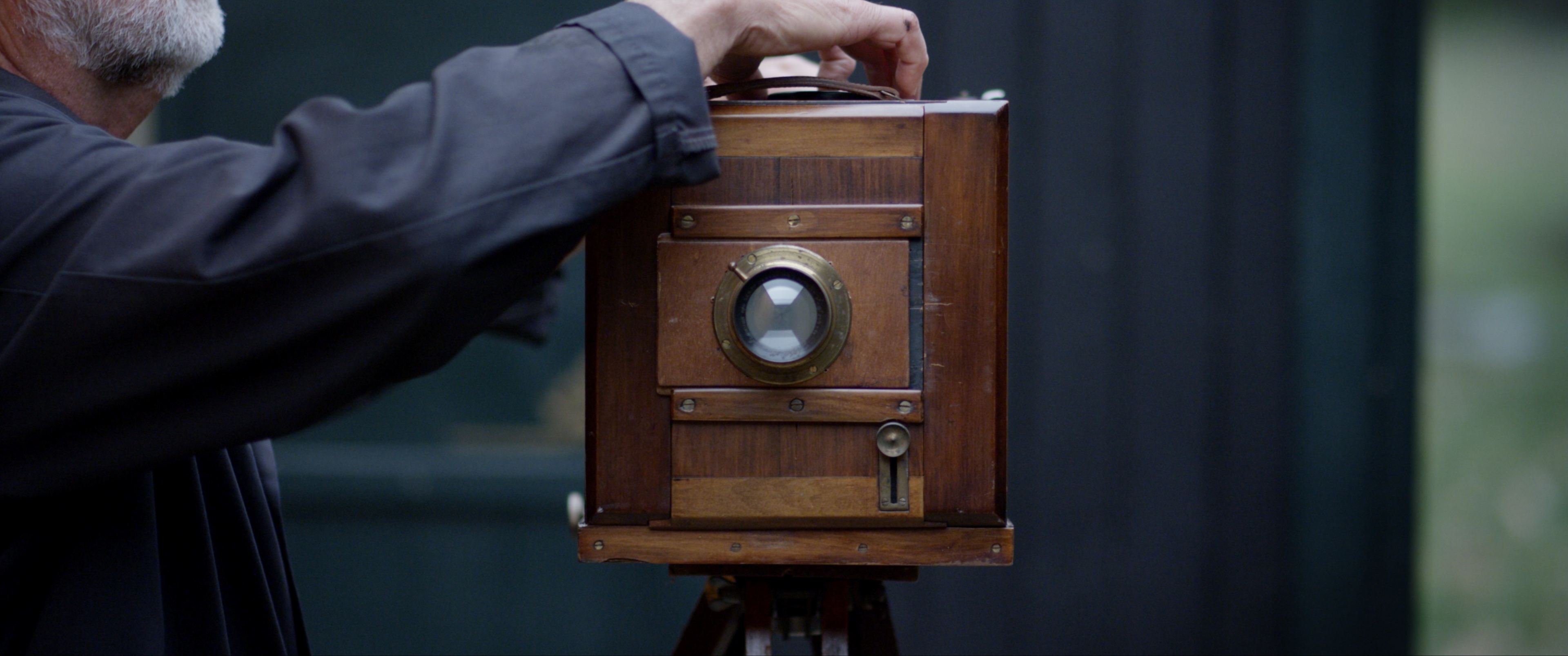
Brian Scadden, once one of only eight wet-plate photographers worldwide, helped revive a nearly lost art. 175 years after its invention, he continues the craft—sharing his passion, process, and belief in permanence in an increasingly digital, fleeting world.

Clocking in at just nine minutes, Through a Glass, Lightly is a deceptively modest film that leaves a lasting impression. Directed by Derrick Sims, the documentary profiles Wairarapa-based photographer Brian Scadden and his enduring devotion to wet-plate collodion photography; a method that demands precision, patience, and a reverence for the image itself.

At first glance, one might expect the film to delve deep into the technicalities of 19th-century photographic methods. And while a few viewers may be left wishing for more time spent on the process itself, Sims has a different aim. He uses Scadden’s story to prompt deeper reflection on how we capture, and value, moments in an increasingly digital world.

Scadden’s journey into photography began in childhood with a simple Box Brownie camera, bought at a local garage sale. That early spark of curiosity matured into a lifelong practice. He embraced the wet-plate method over 40 years ago, at a time when almost no one else in New Zealand was using it. It was, and remains, a deliberate choice to step away from convenience and instead embrace complexity.


The film gently guides us through Scadden’s world, where creating a single photograph is a ritual that can take up to 20 minutes. The steps; from mixing chemicals to coating the glass plate, exposing the image, and developing it before the plate dries—demand full attention. In contrast, today’s culture allows for thousands of images to be captured, filtered, and deleted in seconds. That ease, Scadden suggests, has led to a loss of appreciation. We are taking more photos than ever before, but keeping fewer that truly matter.

One of the film’s most memorable metaphors compares the wet-plate photographer to a hunter with a single bullet. When you only get one shot, you pause, assess, and focus. You are intentional. In today’s world of endless digital ammunition, the value of the individual shot has been lost. This analogy echoes far beyond photography; it speaks to how we consume, create, and connect in the modern era.

Visually, Through a Glass, Lightly is understated but elegant. The cinematography complements Scadden’s quiet, measured voice. There are glimpses of his hands at work, the light bouncing off his glass plates, and the stillness of his studio; all serving to reinforce the contrast between the meditative pace of his practice and the restlessness of contemporary life.


What makes this documentary particularly effective is its refusal to overstate its message. It doesn’t lecture or linger. Instead, it invites viewers to sit with a thought: that perhaps something has been lost in the shift from permanence to impermanence, from substance to speed. That a slower, more intentional way of seeing might still have a place; even if only in a few hands.

That said, the brevity of the film may leave some viewers wanting more. Ironically, the documentary itself takes less than half the time it would take Scadden to create a single photograph using his chosen method. This may well be the point. The film embodies its message, showing how in just a few minutes, something meaningful can still be captured; provided we take the time to look.

Through a Glass, Lightly doesn’t try to be grand or sweeping. It knows its scope and keeps to it. But within that small frame, it captures something essential: a reminder of the care, patience, and intentionality that once defined the art of photography; and the subtle warning that, as technology accelerates, we may be leaving more than just old methods behind.

In the end, this is a quiet, thoughtful film. It doesn’t ask for much; just a few minutes of your time. But what it gives in return is a sense of stillness and reflection, something increasingly rare in a world of endless scrolling. A film for those who have ever paused to ask not just how we take pictures, but why.

Directed by Derrick Sims | 9 mins | New Zealand | English | New Zealand Short Category

Screening at the Doc Edge documentary festival, in Auckland, Wellington, Christchurch and online from 25 June.   

Review written by Alex Moulton

TWO TRAVELLING AUNTIES [DOC EDGE 2025]

Norah and Susie document their adventurous road trips across continents. Beneath the laughter and wanderlust lies a story of quiet resilience—two women who defied judgement, embraced love, and chose freedom on their own terms.

Two Travelling Aunties, a short documentary screening as part of this year’s DocEdge programme, is a quietly moving portrait of two women who chose the open road over the confines of societal expectation. At first glance, it’s a charming and light-hearted tale about travel and companionship, full of warm laughter and colourful scenery. But beneath that surface lies a more complex, bittersweet truth; one that lingers long after the credits roll.

The film introduces us to Norah and her partner; two Singaporean women nearing their 60s who have thrown convention to the wind. In a culture where the label “auntie” is both affectionate and laden with expectations of domesticity, their decision to embrace life on their own terms is gently radical. Instead of settling into retirement or fulfilling roles set by tradition, they have embraced Overlanding; a lifestyle centred around long-term travel by campervan, where the journey is as important as the destination.

Their story is filled with joy: spontaneous detours through Morocco, quiet mornings by the coast in Greece, encounters with other travellers over shared meals and campfires. There’s laughter, lightness, and a sense of deep companionship. Through these simple scenes, the film gives us a glimpse into a life shaped by freedom; freedom from rigid routines, family obligations, and the expectations of what middle-aged women "should" be doing.


What makes Two Travelling Aunties stand out, though, is how gently it unveils the layers beneath this joyful surface. The film does not rely on dramatic revelations but allows the emotional depth to emerge gradually. Norah’s background, coming from a large, conservative Muslim family, brings weight to the story. Her choice to leave, as the only unmarried daughter among nine siblings, was not just about seeking excitement. It was a brave decision to prioritise her own well-being over duty, and to live life authentically rather than in quiet sacrifice.

The documentary’s turning point comes with the quiet, heartfelt realisation that Norah and her travel companion are also romantic partners. This revelation recontextualises everything we’ve seen. Their travels are not just about seeing the world—they are about carving out a safe space for their relationship, far from potential judgment or rejection. As a result, what begins as an uplifting tale of wanderlust also becomes a tender exploration of exile.

This shift lends a melancholic tone to the film’s later stages. While their lifestyle appears idyllic, the camera doesn’t shy away from the emotional costs. Four years into their journey, there is no clear path home, no guarantee of acceptance from their communities. It’s a painful reminder of how prejudice, particularly against LGBTQ+ individuals, still shapes lives in very real ways.


Yet even in this complexity, the documentary remains uplifting. The aunties live each day with intention; making new friends, tasting unfamiliar foods, and delighting in cocktails under the stars. There’s a sweetness to their shared life that is impossible to ignore, even as it coexists with sorrow.

Technically, the film keeps things simple. The dialogue is in English, with subtitles included to support comprehension, though at times the coloured text makes reading slightly difficult. The visuals capture the vibrancy of their journey without being overly polished, letting the focus remain on the people rather than the places.

Ultimately, Two Travelling Aunties is a film that celebrates choice, love, and courage. It reminds us that while choosing to live authentically may come with costs, it can also lead to a life filled with beauty, adventure, and connection. It’s a film that feels like a conversation with a friend; one filled with laughter, honesty, and the kind of vulnerability that sticks with you.

It’s sweet. It’s moving. And it’s quietly revolutionary.

Directed by Christine Seow | 22 mins | Singapore, United Kingdom | English | International Premiere – International Short Category

Screening at the Doc Edge documentary festival, in Auckland, Wellington, Christchurch and online from 25 June.   

Review written by Alex Moulton

VOICES FROM THE ABYSS [DOC EDGE 2025]

An intimate look at La Quebrada Cliff Divers and their ritualistic 100-feet dives into the sea.

Voices from the Abyss is a striking short documentary that marries evocative visual poetry with a cultural portrait of the La Quebrada cliff diving community in Acapulco, Mexico. At once reverent and stylised, the film offers a powerful yet meditative glimpse into a world defined by ritual, risk, and resilience.

Rendered entirely in black and white, the film’s aesthetic feels timeless; an ode to tradition that transcends generations. With slow-motion sequences and sharply composed tracking shots, cinematographer Eliott Reguera captures the stark contrast between the jagged cliffs and the graceful descent of the divers. This careful visual treatment elevates the physical act of diving into something almost sacred. The sound design and colour grading reinforce this tone, wrapping the viewer in an atmosphere that borders on spiritual.

Rather than using a conventional documentary format with sit-down interviews or overt narration, the directors allow the divers to tell their stories in their own voices; through poetic monologues, ambient reflections, and personal memories. These audio tracks float over the imagery, rather than synchronising with visible speakers. The result is intimate, but also abstract. We hear their fears, hopes, and injuries, but rarely see the speakers themselves. This decision adds a layer of mystery and symbolism, but it also introduces a sense of detachment. The voices become part of the artistic collage, rather than leading it.


At the heart of the film is the culture and community of the La Quebrada divers. Their shared identity spans age, gender, and heritage. Children begin diving at low heights, gradually building their strength, technique, and tolerance for fear as they mature. Their bodies tell the story too; calloused hands shaped by the rock, and joints that eventually give way to injury. There is an unspoken progression from youthful initiation to professional mastery, and finally to retirement brought on by physical toll.

What Voices from the Abyss does exceptionally well is conveying the passion and generational knowledge behind the dives. The film shows that diving here is more than a stunt or sport; it’s a way of life. And yet, this passion is tethered to economic necessity. While the poetic narration initially leans towards a romanticised view, the film only touches on the financial realities later on. One diver’s comment about needing someone to cover his jump because he was unwell subtly reveals that this is not just performance art; it’s paid labour, with families depending on the income. Their livelihoods are built on the edge of cliffs, both literally and figuratively.


Despite the documentary’s strengths in storytelling and atmosphere, the stylistic approach does introduce limitations. The beauty of the film comes at a cost: the raw thrill of the dive itself is often lost. With frequent use of slow-motion and cross-cutting, we seldom witness a full dive from start to splash. The awe-inspiring moment, the leap, the fall, the impact, is fragmented. This choice may serve the poetic tone, but it slightly dulls the visceral effect of witnessing someone willingly hurl themselves into a narrow sea inlet from 35 metres above.

That said, the documentary’s message remains strong. It brings forward voices that are often unseen, sharing the perspective of those who risk their bodies not just for adrenaline, but to uphold a cultural legacy and to feed their families. The divers speak not with bravado, but with reflection. Their words and movements, paired with the film’s precise editing and haunting soundtrack, create an emotional resonance that lingers well after the credits roll.


In many ways, Voices from the Abyss is more of a visual poem than a traditional documentary. It sacrifices some immediacy and clarity for atmosphere and symbolism, a trade-off that may divide viewers depending on what they seek from a documentary. But for those open to a more interpretive journey, it offers a captivating window into one of Mexico’s most daring and enduring traditions.

A beautifully composed and thoughtful short documentary that honours the legacy and spirit of Acapulco’s cliff divers. While its heavy editing and indirect narration reduce the sheer impact of the dives themselves, Voices from the Abyss still manages to shine as an artistic and emotional tribute to a remarkable community.

Directed by Irving Serrano, Victor Rejón | 23 mins | Mexico | Spanish | Australasia Premiere – International Short Category

Screening at the Doc Edge documentary festival, in Auckland, Wellington, Christchurch and online from 25 June.   

Review written by Alex Moulton

MISSION: IMPOSSIBLE - THE FINAL RECKONING (2025)

Ethan Hunt and the IMF team race against time to find the Entity, a rogue artificial intelligence that can destroy mankind.

Mission: Impossible – The Final Reckoning brings the long-running franchise to an explosive conclusion, delivering the kind of high-stakes, globe-spanning action that audiences have come to expect from Ethan Hunt and the IMF. Directed once again by Christopher McQuarrie, this final chapter picks up directly from Dead Reckoning Part One, as Hunt (Tom Cruise) and his loyal team face their greatest threat yet; a rogue artificial intelligence known as “The Entity,” which has gained the power to manipulate global defence systems. The stakes are nothing short of apocalyptic, and the film wastes no time in establishing the urgency with a visually stunning submarine sequence beneath the Arctic ice. From there, The Final Reckoning moves at breakneck speed through a series of meticulously constructed set-pieces, cementing Tom Cruise’s commitment to doing the impossible, often quite literally, with real-world stunt work that continues to defy belief.

The film’s dedication to practical effects and daring stunt work is impressive. In fact, Cruise’s now-infamous “burning parachute” stunt, which required him to leap from a helicopter into a wall of flame and then deploy a second chute, was performed sixteen times during filming; a commitment to authenticity that earned him a Guinness World Record. The action sequences as some of the most ambitious in the franchise’s history. From aerial dogfights over secret vaults to precision-driven combat in underwater chambers, the film leaves little doubt about its intent: to overwhelm the senses and astonish viewers. The film does have some early pacing issues and an unwieldy first hour that struggles to connect emotionally.


Narratively, the film tries to balance franchise nostalgia with thematic modernity. Flashbacks to earlier missions and reappearances of characters from previous films attempt to ground the story in a sense of legacy, while the inclusion of AI as the central villain gestures toward contemporary global fears around autonomous technology. Unfortunately, this central threat, “The Entity”, doesn’t always land with the weight required to sustain its own menace. Likewise, the human antagonist, Gabriel (Esai Morales), fails to leave a lasting impression, with limited emotional depth and screen presence. This is especially noticeable in the final confrontation with Ethan, which lacks the catharsis or moral complexity that previous showdowns, such as those in Fallout or Rogue Nation, successfully delivered.

Tom Cruise, as always, carries the film with charismatic intensity. Now in his sixties, Cruise shows no signs of slowing down, and his portrayal of Ethan Hunt remains one of action cinema’s most enduring and dynamic performances. His willingness to perform dangerous stunts not only elevates the authenticity of the film but also reinforces the physicality that separates this franchise from CGI-heavy counterparts. While Hunt’s emotional journey is sometimes overshadowed by the demands of the plot, Cruise delivers with the same commitment that has defined his career. Alongside him, series regulars Rebecca Ferguson, Simon Pegg, and newcomer Pom Klementieff provide solid support, though their arcs feel more functional than transformative. There is a sense that the film is trying to do too much, offering closure, delivering spectacle, and introducing new threats, all while adhering to the expectations of a modern blockbuster runtime that creeps beyond two and a half hours.


The film’s central theme, technology spiralling beyond human control, feels timely but is arguably underdeveloped. While the AI premise offers an excuse for globe-trotting, encrypted secrets, and doomsday devices, it never quite becomes the philosophical dilemma it hints at. Instead, it functions more as a catalyst for chaos. This may disappoint viewers looking for the kind of narrative sophistication that earlier entries flirted with, particularly in Fallout. Still, for many, the sheer visual energy is enough. While it may not be the most refined entry in the series, it certainly succeeds as a grand farewell. 

From a technical standpoint, The Final Reckoning excels. The cinematography, practical effects, and production design reflect the franchise’s ever-increasing scale and attention to detail. The musical score, composed by Max Aruj and Alfie Godfrey, builds effectively on the series’ iconic Lalo Schifrin theme, lending momentum and emotional resonance to several of the film’s most critical moments. The editing is crisp, particularly in the film’s latter half, where the set-pieces connect more fluidly. However, some digital enhancement of real stunts is noticeable and, especially the parachute dive, can detract from their authenticity, a rare misstep in a series that has otherwise defined itself by practical innovation.


The film’s final moments leave the franchise’s future slightly ambiguous. Though there are clear suggestions that this may be Ethan Hunt’s last mission, the film stops short of definitive closure. Whether this is a clever move to keep the door open or a failure to commit to a satisfying ending is a matter of perspective. What is clear, however, is that The Final Reckoning delivers the thrills it promises, even if it doesn’t quite achieve the emotional depth or narrative elegance of its predecessors.

Mission: Impossible – The Final Reckoning is a film of grand ambition, visual spectacle, and relentless energy. It exemplifies everything the franchise has become known for; high-speed chases, death-defying stunts, and a central performance that refuses to fade with age. While it struggles with pacing, emotional engagement, and villain development, it remains an exhilarating cinematic experience. Fans of the franchise will find much to admire, even as the film shows signs of the strain involved in trying to top everything that came before. It may not be perfect, but it is certainly unforgettable; and in the landscape of modern action films, that remains a mission accomplished.

Mission: Impossible - The Final Reckoning was released in NZ cinemas on May 22, 2025

Review written by Alex Moulton