Showing posts with label Crime. Show all posts

CRIME 101

An elusive thief, eyeing his final score, encounters a disillusioned insurance broker at her own crossroads. As their paths intertwine, a relentless detective trails them hoping to thwart the multi-million dollar heist they are planning.

Bart Layton’s Crime 101, adapted from Don Winslow’s short story, arrives with all the ingredients of a polished crime thriller. It has a seasoned detective on the edge of burnout, a meticulous thief planning one last job, an insurance manager caught in the crossfire, and a wildcard criminal who thrives on chaos. On paper, it promises a tense, character-driven cat and mouse story set against a neo noir backdrop. In practice, the film delivers a competent and occasionally gripping experience, though it rarely pushes beyond the familiar rhythms of the genre. It is a film that works well enough in the moment, even if it never quite finds the emotional or thematic spark that would make it linger.

The story follows Davis, played by Chris Hemsworth, an elusive thief whose reputation rests on precision, restraint, and a strict personal code. He is preparing for what he hopes will be his final and most ambitious heist. His path crosses with Sharon, an insurance manager portrayed by Halle Berry, whose own career frustrations and personal disappointments make her unexpectedly receptive to Davis’s proposition. Meanwhile, Detective Lou Lubeski, played by Mark Ruffalo, is closing in on the case. Lubeski is a man worn down by years of chasing criminals who always seem to slip through his fingers. His pursuit of Davis becomes a way to reclaim a sense of purpose that has been eroded by time, bureaucracy, and the quiet collapse of his personal life.


Complicating all of this is Orman, played by Barry Keoghan, a rival thief whose methods are far more violent and unpredictable. Keoghan leans into the unsettling qualities that have become a hallmark of his screen presence. He brings a jittery, unnerving energy that cuts through the otherwise controlled tone of the film. Whenever he appears, the story sharpens. His presence injects a sense of danger that the rest of the narrative sometimes struggles to generate on its own.

The dynamic between these four characters forms the core of the film. Each of them is exhausted in their own way. Lubeski is fighting the slow erosion of his ideals. Davis is trying to escape a life that has defined him for too long. Sharon is pushing against a career that has stalled. Even Orman, in his own twisted fashion, seems driven by a need to disrupt the world around him simply to feel something. The film positions them as people reaching the end of their patience, their ambition, or their illusions. This shared sense of midlife crisis gives the story a thematic throughline, even if the execution is sometimes uneven.


One of the film’s limitations is its decision to begin after Davis’s carefully constructed world has already started to unravel. We are told that he is a master thief who never leaves evidence and never harms anyone, yet we never see him successfully pull off one of these supposedly flawless heists. The film relies on exposition and the testimony of other characters to establish his reputation. As a result, the foundation feels slightly shaky. A more patient opening, one that allowed us to witness Davis at the height of his abilities, might have given the story a stronger emotional and narrative anchor. Instead, we meet him at a moment of decline, which makes it harder to appreciate what he stands to lose.

The performances are solid across the board, though the chemistry between the leads is not always strong enough to elevate the material. Hemsworth delivers a surprisingly restrained performance, leaning into Davis’s social awkwardness and obsessive tendencies. It is an interesting choice, though it does come at the cost of some charisma. Ruffalo once again proves adept at playing men who are frayed at the edges. His portrayal of Lubeski captures the moral fatigue of someone who cannot let go of a case even when everyone around him urges him to move on. Berry, unfortunately, is given less to work with. Sharon’s role in the story makes sense on paper, but the film never fully explores her inner life or her motivations. Berry does what she can, but the character feels underwritten, especially considering her talent and screen presence.


Visually, the film is confident. Layton and his team craft a world that blends grit with polish. The color palette leans into darker tones, giving the film a moody texture that suits its themes. At times, though, the aesthetic shifts toward something cleaner and more sanitized, which creates a slight inconsistency in the overall feel. The action sequences, particularly the car chases, are energetic and well executed. They add momentum, but they are not always essential to the plot. Some of them feel like attempts to inject excitement into moments where the emotional stakes are not fully developed.

The film’s biggest challenge is its emotional distance. The characters are well defined in concept, but their relationships and backstories never fully resonate. The script gestures toward deeper conflicts and personal histories, yet these elements rarely land with the intended weight. The result is a story that is engaging on a surface level but does not leave much of an imprint once the credits roll. The climax is serviceable, offering a tidy resolution to the central conflict, but it lacks the catharsis or surprise that might have elevated the film beyond its genre conventions.


Still, Crime 101 is not without its strengths. It is competently made, well acted, and paced with enough urgency to keep the viewer invested. Keoghan’s performance in particular gives the film a jolt of unpredictability that prevents it from feeling too safe. Layton’s direction is steady, and the adaptation captures the broad strokes of Winslow’s story even if it does not fully embrace the moral complexity that makes his work so compelling.

In the end, Crime 101 is a film that will satisfy viewers looking for a straightforward crime thriller with familiar beats and polished execution. It is not groundbreaking, and it does not aspire to be. It is the kind of movie that fills two hours comfortably, offering enough tension and action to hold attention without demanding much in return. It may not linger in the memory, but it delivers a competent and occasionally gripping experience while it lasts.

Crime 101 is in NZ cinemas from February 12, 2026
Find your nearest screening here

Review written by Alex Moulton

NO OTHER CHOICE (2025)

A man is laid off from the paper company he has worked at for 25 years. Over a year later and still jobless, he hits on a solution: eliminate the competition.

Park Chan-wook’s No Other Choice arrives with the kind of creative pedigree that immediately raises expectations. With Park directing, and a cast led by the magnetic Lee Byung-hun, the film promises a stylish and morally complex descent into desperation. In many respects it delivers exactly that. The craftsmanship is meticulous, the performances are layered, and the thematic ambition is unmistakable. Yet for all its technical strength, No Other Choice is a film that seems determined to keep its audience unsettled. Sometimes this works in its favour, and sometimes it becomes a barrier to engagement.

At the centre of the story is Yoo Man-su, a man who has spent twenty-five years shaping his identity around his job at a paper mill. He is the kind of worker who embodies loyalty and discipline. When an American corporation acquires the mill, Man-su refuses to fire the colleagues he trained and respects. His refusal results in his own dismissal. The firing is delivered with the sterile politeness of modern corporate bureaucracy, and the impact on his life is immediate and devastating.


Park presents this downfall as a slow collapse rather than a dramatic explosion. Bills accumulate. His family’s stability begins to crumble. Job postings appear, but every vacancy attracts a crowd of men who look and sound exactly like him. They are interchangeable, desperate, and shaped by the same system that has now discarded them. It is in this environment that Man-su reaches a disturbing conclusion. He decides that the only way to secure a job is to eliminate the competition. Not figuratively. Literally.

This premise could have been played as a brisk and darkly comic thriller. Park chooses a more uncomfortable path. Each action and decision is drawn out, chaotic, and riddled with complications. Man-su learns too much about his competition. He discovers their families, their struggles, and their disappointments. They are not villains. They are reflections of him. This emotional proximity complicates his mission and creates a sense of moral nausea that lingers throughout the film.


The tonal shifts begin early and never settle into a predictable rhythm. The first attempted murder collapses into a bizarre sequence involving mistaken identity and slapstick physicality. Later scenes plunge into much darker territory. Park seems intent on denying the audience any stable emotional footing. One moment the film invites laughter at Man-su’s ineptitude, the next moment it confronts the viewer with the bleakness of his situation and the violence he is capable of committing.

This instability is both the film’s most distinctive quality and its most significant challenge. Viewers who are familiar with Park’s genre-blending tendencies may find the constant shifts intriguing. Mainstream audiences, particularly those who already struggle with subtitles, may find themselves adrift. The film refuses to commit to a single identity. It is not a straightforward thriller, nor a pure comedy, nor a conventional drama. Instead, it occupies a space that mirrors Man-su’s own psychological state. He is confused, conflicted, and constantly on the edge of collapse. The film reflects that instability in its structure and tone.


Visually, the film is striking. Cinematographer Kim Woo-hyung delivers a series of inventive and sometimes audacious shots that keep the viewer engaged even when the pacing slows. The camera peers up from the bottom of a glass, stares out from the eye of a corpse, and finds unusual angles that heighten the sense of disorientation. Production designer Ryu Seong-hie complements this with environments that feel both authentic and symbolically charged. Homes appear comfortable until the cracks reveal themselves. Workplaces appear efficient until the underlying dehumanisation becomes clear.

Lee Byung-hun anchors the film with a performance that is as unpredictable as the narrative itself. He moves between simmering rage, awkward tenderness, and genuine menace with remarkable fluidity. One moment he appears bumbling and overwhelmed. The next moment he becomes genuinely frightening. This volatility makes him compelling to watch, even as his moral compass dissolves. He is not a hero and not even an antihero. He is a man cornered by a system that has no use for him, making choices that are indefensible yet tragically understandable.


The film’s most significant weakness is its pacing. At two and a half hours, No Other Choice stretches its material further than necessary. Scenes that should be tight and tense are allowed to sprawl. The first murder attempt, in particular, feels far longer than it needs to be. The sequence begins with promise but continues long after its narrative purpose has been fulfilled. The cumulative effect is a film that feels heavier than the story requires. Its momentum is repeatedly interrupted by indulgent detours.

Despite these issues, the film offers a sharp critique of modern capitalism. Park dismantles any lingering nostalgia for the industrial past. Workers who were once valued for their skill are now rendered obsolete by automation and corporate indifference. The men Man-su targets are not rivals by choice. They are casualties of a system that forces them into competition. The violence becomes a grotesque metaphor for the economic pressures they face.


Ultimately, No Other Choice is a film that rewards patience but demands tolerance for discomfort. It is visually inventive, thematically rich, and anchored by a magnetic central performance. Its refusal to settle into a single tone, combined with its deliberate pacing, makes it a polarizing experience. Viewers expecting a conventional thriller or a neatly packaged black comedy may find themselves frustrated.

Park Chan-wook has created something bold, messy, and memorable. Whether audiences embrace it or recoil from it will depend on their appetite for tonal chaos and their willingness to sit with a story that offers no easy catharsis. The film may not be universally accessible, but it is unmistakably the work of a filmmaker who is unafraid to push boundaries, even at the risk of alienating viewers who prefer their cinema more neatly categorised.
 
No Other Choice is coming to Aotearoa NZ cinemas February 19, 2026.
Find screenings here

Review written by Alex Moulton

IT WAS JUST AN ACCIDENT (2025)

An unassuming mechanic is reminded of his time in an Iranian prison when he encounters a man he suspects to be his sadistic jailhouse captor. Panicked, he rounds up a few of his fellow ex-prisoners to confirm the man's identity.

Jafar Panahi’s It Was Just an Accident is a film that lingers not because it delivers a tidy conclusion, but because it refuses to. It’s a quiet, stripped‑back work that leans into uncertainty, letting tension build in the pauses and unfinished thoughts. The film’s strength lies in its restraint. It never rushes or forces its characters toward emotional clarity. Instead, it sits with discomfort and trusts the audience to sit with it too.

The story begins with a small, almost forgettable moment: a man with an artificial leg pulls into a garage. Vahid, a mechanic played with raw vulnerability by Vahid Mobasseri, hears the squeak of the prosthetic and freezes. That tiny sound pulls him back into a part of his past he has never escaped. The recognition is instinctive rather than certain, and that fragile uncertainty becomes the film’s emotional spine.


Panahi builds the narrative through quiet conversations, long silences, and the kind of hesitant exchanges shaped by memory and self‑protection. The performances from Vahid Mobasseri, Mariam Afshari, and Ebrahim Azizi feel unpolished in the best way, as if the characters are speaking around their pain rather than through it. Their dialogue loops, falters, and circles back, capturing the way trauma reshapes language.

At its core, the film is about recognition; or the impossibility of it. It explores how memory can be both anchor and trap, how certainty erodes under pressure, and how people try to reclaim dignity after being dehumanized. Panahi never simplifies these ideas. He lets the characters sit with their doubt and their need for justice, even when justice is impossible to define.


The tension doesn’t come from action. It comes from the moral weight pressing down on everyone involved. Panahi keeps the camera close, often refusing to show what characters see or fear. That choice creates a constant sense of unease. You’re always aware of what’s missing, what’s obscured, what can’t be confirmed. The film becomes a study in how uncertainty shapes behaviour and how it corrodes the people who carry it.

There’s a deliberate minimalism to the storytelling. Scenes stretch just long enough for discomfort to settle. Conversations hover without resolution. The film isn’t interested in answers. It’s interested in the emotional terrain people inhabit when clarity is out of reach.

Panahi threads in a quiet commentary on power and its residue; how it’s used, how it lingers, and how it shapes people long after the moment of harm. The film never lectures. It simply shows how systems of control echo through the lives of those who survived them.


What makes It Was Just an Accident so gripping is its refusal to settle. It doesn’t build toward a grand revelation or a cathartic release. Instead, it leans into ambiguity, trusting the audience to sit with the same uncertainty the characters face. Some may find that frustrating, but the film’s honesty lies in that choice. It understands that some wounds don’t close neatly, and some questions don’t have answers.

The structure drifts in a way that feels intentional. The film moves through moments of tension, doubt, and flashes of dark humor. At times, the uncertainty becomes so overwhelming it borders on absurd, revealing how revenge can twist into chaos when certainty is impossible. These tonal shifts never undercut the seriousness of the story. They highlight how unstable the pursuit of justice becomes when the truth is slippery.


Panahi also weaves in subtle reflections on corruption and authoritarianism. The film shows how violence from those in power seeps into everyday life, shaping how people treat each other long after the original harm is done. The characters aren’t just confronting a man. They’re confronting a system that taught them to fear, to doubt, and to lash out.

The film ends the way it begins: with uncertainty. There is no moment where everything becomes clear. No revelation that resolves the moral dilemma. That ambiguity is the point. The film isn’t about the destination. It’s about the uneasy journey, the tension of not knowing, the ache of wanting justice in a world where truth is never solid.


Panahi has crafted something raw, honest, and stripped of ornamentation. It’s a story about people trying to reclaim their dignity, about the fragile line between victim and perpetrator, and about how easily certainty can harden into something dangerous. It’s not a film that tries to impress with spectacle. It’s a film that asks you to sit with discomfort and accept that some wounds never fully close.

It Was Just an Accident may not satisfy those looking for a clean narrative arc, but its power lies in its refusal to simplify. It’s a quiet, unsettling, deeply human work that stays with you precisely because it doesn’t tell you what to think. It leaves you where its characters are left: searching, questioning, and trying to make sense of a world where certainty is a luxury few can afford.

It Was Just An Accident is coming to Aotearoa NZ cinemas January 29

Review written by Alex Moulton

WEAPONS (2025)

When all but one child from the same classroom mysteriously vanish on the same night at exactly the same time, a community is left questioning who or what is behind their disappearance.

Zach Cregger’s Weapons arrives with an air of expectation, following the success of his earlier horror feature Barbarian. Where that film thrived on shocks and unexpected turns, Weapons takes a different path, opting for a slow, layered build that blends mystery, crime drama, and ultimately supernatural horror. It is a film designed to unsettle its audience, and while it may not satisfy everyone, it achieves a rare quality in contemporary cinema: genuine unpredictability.

The story begins with a deeply disturbing event. In the small American town of North Brenton, seventeen third-grade children vanish from their homes in the middle of the night. The scale of the disappearance is staggering, and the community is immediately plunged into grief, fear, and suspicion. Only one child, Alex, played by Cary Christopher, remains. His survival and the reasons behind it become one of the central mysteries. From this premise, Cregger constructs a narrative divided into chapters, each told from a different perspective. It is not a straightforward crime drama but a fractured account of events that slowly pieces itself together.


The first chapter introduces Josh Brolin’s character, a father whose young son is among the missing. His performance is one of the film’s highlights. Brolin leans into raw obsession, portraying a man consumed by grief, rage, and a desperate need for answers. The camera often lingers on his face, capturing the mix of fury and hopelessness that defines his journey. It is a performance that feels both frightening and sympathetic, embodying the kind of flawed determination that anchors the film in real human emotion.

The second major perspective is that of Julia Garner as Justine, a teacher caught in the aftermath of the tragedy. Garner delivers a strikingly layered performance. She is burdened with guilt, attacked by her community, and haunted by her own inability to protect her students. Her arc explores how quickly suspicion can turn towards those in positions of responsibility, even when they themselves are victims. Through Justine, the film touches on themes of blame, collective trauma, and the fragility of trust.


Cary Christopher deserves equal recognition. As Alex, the one boy left behind, he captures a haunting mixture of innocence and burden. He is too young to fully understand the magnitude of what has happened, yet he carries the weight of being the lone survivor. His interactions with both Brolin’s father and Garner’s teacher add layers of complexity, reminding viewers that children in stories like these are not just symbols of innocence lost but characters in their own right, forced to navigate overwhelming trauma.

Cregger’s choice to structure the film as a series of shifting perspectives pays dividends. Each chapter withholds certain information, forcing the audience to stay alert and piece together the narrative themselves. Unlike many thrillers that tip their hand too early, Weapons remains elusive. It offers fragments and glimpses, but never enough to predict the full outcome, until the film is ready for it's bid reveal. This structure keeps tension alive across the film’s runtime and prevents the early sections from becoming stagnant.


Visually, Weapons is atmospheric. The cinematography leans into a subdued, gritty aesthetic that feels reminiscent of Stephen King’s worlds: small towns with dark secrets, shadowed interiors, and a creeping sense that something unnatural lurks just beneath the surface. There are moments of startling imagery: glimpses of twisted clown-like makeup, unsettling door camera footage, and lingering shots of quiet suburban streets that feel anything but safe. The result is a world that appears ordinary on the surface but hums with menace underneath.

The film’s sound design enhances this dread. Silence is used with precision, broken by sudden noises that jolt both characters and viewers. The score avoids excess, instead drawing out unease with sparse instrumentation and drawn-out tones. Together with the visuals, the audio design helps create a mood that is tense without being overwhelming, a slow tightening of the screws rather than an immediate assault.


Where the film becomes divisive is in its final act. After carefully sustaining the atmosphere of crime mystery and psychological drama, Weapons pivots into supernatural horror, revealing the true forces behind the disappearances. For some viewers this is the bold payoff that the story has been carefully building toward, expanding the narrative from local tragedy into cosmic terror. For others, it feels like a departure, trading in subtle unease for familiar horror tropes.

Personally, the final chapter feels both invigorating and frustrating. On one hand, it provides an escalation that is undeniably dramatic, turning quiet dread into outright nightmare, with a karmic resolution. On the other, it leaves many questions unresolved. The mystery that carried so much weight throughout the film is not fully explained, and viewers who crave concrete answers may find themselves unsatisfied. The sense of dread remains, but the intellectual closure is lacking.


This issue ties into the broader experience of Weapons. It is a film that thrives on tension, uncertainty, and dread, but it does not deliver clarity or abundant action. If you enter hoping for a horror film packed with set-piece scares, you may feel underwhelmed. If you hope for a neatly tied mystery, you may find the lack of depth in its answers frustrating. Yet the very refusal to conform to expectations is also what makes the film stand out.

What lingers most after watching is not a particular jump scare or a shocking twist, but the atmosphere of grief and paranoia. Cregger explores how a community collapses in the face of unexplainable tragedy, how suspicion corrodes relationships, and how desperation drives people to extremes. These human elements remain grounded even when the story turns supernatural. That balance, between the ordinary pain of loss and the extraordinary terror of otherworldly forces, gives the film its unique character.


The performances elevate the material. Brolin, Garner, and Christopher are all outstanding, and the supporting cast contribute convincingly to the portrait of a fractured town. Even when the story risks slipping into the unbelievable, the actors keep it tethered to real emotion.

Weapons is a film that deserves recognition for its ambition and its ability to sustain suspense. It is refreshing to see a horror-mystery that withholds rather than overexplains, that chooses mood over spectacle, and that challenges viewers to stay engaged. While the lack of resolution and limited action may frustrate, the strengths outweigh the flaws. It is a film that lingers, unsettling in ways that straightforward horror rarely achieves.

Cregger may not have delivered a perfect film, but he has crafted one that is bold, unnerving, and memorable. Weapons is less about the answers than the experience of asking questions in the dark. For viewers willing to embrace uncertainty, it offers a chilling and rewarding journey.

Weapons was released in NZ cinemas on August 7, 2025
Find your nearest screening here

Review written by Alex Moulton

CAUGHT STEALING (2025)

When his punk-rock neighbour asks him to take care of his cat for a few days, New York City bartender Hank Thompson suddenly finds himself caught in the middle of a motley crew of threatening gangsters who all want a piece of him.

Darren Aronofsky’s Caught Stealing is a chaotic, high-octane dive into the criminal underworld of 1990s New York City. It combines violence, humour, and the unpredictability of life in the fast lane. At its core, the film follows Hank Thompson, played by Austin Butler. Hank was once a promising high-school baseball star whose dreams were derailed years earlier in a tragic accident. Now he works as a bartender and enjoys a decent relationship while following his favourite baseball team. Hank’s life seems stable until he agrees to watch a neighbour’s Maine Coon cat, a simple task that thrusts him into a dangerous world of gangsters, underworld dealings, and escalating chaos.

Aronofsky, known for his intense films Black Swan and Requiem for a Dream, softens his usual bleak intensity. He delivers a chaotic, darkly comedic story that carries energy similar to Danny Boyle and Guy Ritchie. The film often evokes the rapid-fire action of Lock, Stock and Two Smoking Barrels and Snatch. Quick editing, sudden plot twists, and eccentric characters keep viewers on edge. At times the film slows and becomes darker, giving weight to Hank’s backstory and the city’s criminal landscape.


Austin Butler anchors the film as Hank. The character is relatable but frustrating. He cocky, but also passive and indecisive, often failing to assert himself or take responsibility. This makes his encounters with the criminal world both exasperating and compelling. Butler balances these flaws with glimpses of humanity, especially in his care for the cat and protective instincts toward his girlfriend Yvonne, played by Zoë Kravitz. By the film’s climax, Hank grows more resourceful and courageous, providing a satisfying character arc. He may not be immediately likeable, but the audience roots for him as an underdog.

Zoë Kravitz is magnetic as Yvonne. From the start, she brings charisma and intelligence, grounding the story and giving Hank a moral anchor. Her presence dominates the early act, but as Hank is drawn deeper into the underworld, the focus shifts to his journey. Kravitz balances charm, authority, and warmth, making Yvonne a crucial part of the story.


The ensemble cast adds unpredictability and fun. Our favourite Marvel villains Sabretooth and Kingpin (Liev Schreiber and Vincent D’Onofrio) play violent Orthodox Jewish brothers, creating tense and memorable sequences. Matt Smith, famous as Doctor Who, sports a mohawk and punk attire, delivering a quirky performance as Hank’s eccentric neighbour. Bad Bunny appears as a flamboyant Puerto Rican gangster, providing humour and menace reminiscent of a Guy Ritchie caper. Secondary characters, including Regina King as a poker-faced detective and Griffin Dunne as a grizzled biker boss, bring depth and texture, making New York’s criminal ecosystem feel vivid and lived-in.

Visually, the film is gritty and claustrophobic. Matthew Libatique’s cinematography relies on handheld camera work, tight framing, and dimly lit interiors. The close-ups, which could feel intense even on a small screen, translate effectively to the cinema, amplifying tension and danger. The textures of the city, its grime and decay, heighten the sense of threat and chaos.


The soundtrack by post-punk band Idles contributes anarchic energy. Their driving music complements the chaotic plot and eccentric criminal encounters. The score enhances tension and amplifies dark humour, reinforcing the film’s unpredictable tone.

Charlie Huston’s script balances twists with humour. Hank’s encounters with gangsters, violent brothers, and eccentric characters provide constant surprises and keep the story engaging. These sequences echo the cleverness of classic capers, while Aronofsky allows darker moments to give the story more emotional weight.

The film has minor flaws. Hank’s passivity early on can frustrate viewers, and certain sequences linger on brooding atmospheres, slowing the otherwise energetic story. The slower parts contrast with the rapid action of other scenes, creating an uneven rhythm. However, the strong ensemble cast and Butler’s evolving performance maintain engagement, and the slower sections add depth to character development rather than halt the narrative.


For those who enjoy crime capers with wit, grit, and unpredictability, Caught Stealing delivers a thrilling ride. Its blend of action, eccentric encounters, and dark humour makes it a memorable entry in modern crime-thriller cinema. Hank Thompson may not be the most likeable hero at first, but his journey from passive bartender to resourceful survivor makes the film compelling. With Kravitz’s strong performance and a lively supporting cast, Caught Stealing is a fast, violent, and fun story set in the chaotic heart of New York’s criminal underworld.

Caught Stealing is being released in NZ cinemas from August 28, 2025.
Find your nearest screening here

Review written by Alex Moulton

THE NAKED GUN (2025)

Lieutenant Frank Drebin Jr becomes a police officer like his legendary father and must save the police department from shutting down by solving a case.

Reviving a franchise like The Naked Gun is no small task. The original films were beloved for their relentless silliness, their deadpan delivery, and their complete disregard for logic. This 2025 entry understands that legacy and embraces it fully. What results is a comedy that hits and misses in equal measure, but never stops trying to get a laugh out of you.

Liam Neeson plays Frank Drebin Jr., son of the famously clueless detective played by Leslie Nielsen. Known for his serious, intense roles, Neeson may seem like an odd choice for such a broad comedy. But like Nielsen before him, Neeson makes it work by playing everything with absolute seriousness. The more ridiculous the scene, the more stoic his face becomes, and the funnier the whole thing is.


Pamela Anderson stars opposite him as Beth Davenport, a crime novelist and the film’s love interest. Wearing a trench coat and beret, she throws herself into the role with enthusiasm, balancing a self-aware sense of parody with complete commitment to the part. Their chemistry is surprisingly effective, grounded in how both actors fully buy into the madness of the story.

Speaking of story, there isn’t much of one. The plot is barely a thread, serving only as a vehicle for gags. Drebin Jr. finds himself entangled in a scheme involving a billionaire villain named Richard Cane, played with gleeful menace by Danny Huston. The plan involves a doomsday tech gadget called the P.L.O.T. Device, which threatens humanity in a vaguely defined but ominous way. It’s nonsense, of course, and that is entirely the point.

From the opening scene, where Neeson impersonates a schoolgirl during a bank heist, the film sets the tone clearly. It is silly. It is chaotic. And it does not care whether you think it has gone too far. Bodily function jokes, extended physical gags, and pun-heavy dialogue come fast and loud. Some land beautifully. Others fall flat. A few stretch on far too long. But the pace is relentless, so if a joke doesn't work, another one is seconds away.


The humor here feels exactly like something Seth MacFarlane would produce, and indeed, he did. Fans of Family Guy will feel right at home. The film is full of jokes that are proudly dumb, repeated too many times, or delivered with such commitment they eventually become funny out of sheer persistence. It is the cinematic equivalent of someone refusing to stop telling a joke until you laugh.

What saves the film from collapsing under its own nonsense is the sincerity of its performances. Neeson doesn’t parody Frank Drebin. He creates a new version who is still completely serious, still wildly, incompetently competent, and still hilarious. He is not doing a Nielsen impression, but he understands what made Nielsen’s performance work. The comedy comes from taking absolute absurdity with absolute gravity.

Anderson, too, deserves credit for throwing herself into the insanity. Her character doesn’t make much sense, and she often seems to drift between genres, but she plays it with such conviction that it works. Her presence brings a strange kind of heart to the film, and her scenes with Neeson feel genuine even when the world around them is collapsing into chaos.


Of course, not every part of the film lands. There are jokes that feel dated, sequences that drag, and moments where the film seems to be running in circles. At 85 minutes, it still somehow manages to feel a bit too long in places. Certain punchlines are repeated more than they should be, and some sketches feel like they were pulled from a rejected comedy special. But the movie never stops trying, and that effort gives it a strange charm.

There are moments of real laugh-out-loud hilarity. During my screening, the audience rarely laughed together at the same time, but someone was always laughing. That may be the film’s greatest strength. It casts such a wide comedic net that nearly everyone will find something that lands. Whether it is a physical pratfall, a ridiculous pun, or a clever bit of visual humor, there is something here for every type of comedy fan.

This is not a modern comedy in the typical sense. It does not rely on sarcasm, clever callbacks, or edgy one-liners. It feels more like a lost cousin of Airplane! or a series of Monty Python sketches stitched together by a threadbare plot. There is joy in that. It reminds us that not every comedy needs to be cool or clever. Sometimes it is enough to just be ridiculous.


For fans of the original trilogy, this film feels more like a tribute than a reboot. It honors the style and tone of Leslie Nielsen’s classic performances, but it does not try to copy them. It updates the formula without losing what made it work. It is dumb, yes. But it is a glorious kind of dumb. The kind that knows exactly what it is and never pretends to be anything else.

Neeson may never be as iconic in this role as Nielsen, but he brings his own kind of magic. He looks like he is having fun, even when he is playing a character who never cracks a smile. That commitment helps ground the film and gives it a core of sincerity that makes the chaos more enjoyable.

All in all, The Naked Gun delivers a mixed bag of comedy. Some gags hit hard. Others are total misses. But the sheer volume of jokes ensures there is never a dull moment. For anyone willing to turn off their brain and embrace the absurdity, there is plenty of fun to be had. It is not refined, and it certainly isn’t consistent, but it is undeniably entertaining.

This is a film built on chaos. And somehow, that chaos works.

The Naked Gun is being released in NZ cinemas from August 21, 2025.
Find your nearest screening here

Review written by Alex Moulton

AGATHA CHRISTIE'S MURDER ON THE ORIENT EXPRESS (2025)

A murder aboard the luxurious Orient Express leads detective Hercule Poirot to investigate a group of eight suspects, all trapped on the train by a snowdrift, in this classic Agatha Christie whodunnit. Adapted for the stage by Ken Ludwig.

In Auckland Theatre Company’s Murder on the Orient Express, the audience is swept aboard a moving train and into a world of opulence, suspicion, and sharply timed comedy. Adapted for the stage by Tony-nominated playwright Ken Ludwig and directed by Shane Bosher, this production delivers a theatrical experience as rich and layered as a Christie mystery ought to be—complete with lavish sets, an evocative score, and a brilliant ensemble cast.

Photo credit: Andi Crown Photography

Set in the winter of 1934, the story follows world-famous Belgian detective Hercule Poirot as he returns from a case abroad. His journey home is interrupted when the Orient Express becomes stranded in the snow somewhere between Istanbul and London. Come morning, an American tycoon is discovered murdered in his cabin, and with the train cut off from the outside world, Poirot must deduce which of the fellow passengers is responsible.

At the centre of this ensemble mystery stands Cameron Rhodes as Poirot, a performance as fastidious as the detective himself. His portrayal walks the tightrope between dry wit and moral gravity, never allowing the moustache—or the melodrama—to overwhelm the intellect of the character. Rhodes anchors the play, drawing the audience in with a detective whose calm is increasingly tested as the pieces refuse to fall neatly into place.

Photo credit: Andi Crown Photography

Yet it is not only Poirot who impresses. Rima Te Wiata’s Helen Hubbard is a whirlwind of brassy charm and comic timing, effortlessly commanding attention whenever she bursts onto the scene. Jennifer Ludlam brings regal dignity to Princess Dragomiroff, and Mirabai Pease plays Mary Debenham with quiet intelligence and an undercurrent of tension. Sophie Henderson gives Countess Andrenyi both elegance and edge, while Bronwyn Ensor is heartbreaking and sincere as the timid Greta Ohlsson. The cast brings Christie’s characters to vivid life, each with secrets lurking beneath their carefully constructed facades.

What sets this production apart, however, is its sheer visual ambition. John Verryt’s set design is nothing short of exceptional. The modular construction of the train carriage, with its ornate detail and clever mobility, allows scenes to glide from compartment to compartment with ease. Sliding panels and practical doors simulate both the intimacy and the isolation of train travel, while never sacrificing visibility or pace. It’s a rare feat in stage design—to create something both beautiful and believable—but this production accomplishes just that.

Photo credit: Andi Crown Photography

Equally striking is the use of lighting and projection. Sean Lynch’s lighting design sculpts the scenes with precision, shifting tone from comedy to suspense with changes as subtle as a shaft of light falling on a dagger or the glint in Poirot’s eye. When combined with Paul McLaney’s atmospheric soundscape and Harley Campbell’s motion projections, the stage becomes a living, breathing train—complete with steam, snow, and the low rumble of wheels on track.

This sensory richness creates an immersive environment where the audience needs no effort to imagine themselves aboard the Orient Express. The visual storytelling is so complete that the focus remains firmly on the unfolding mystery. There is no need to ‘fill in the blanks’ as is often the case in stage productions; the world is built with such integrity and detail that nothing distracts from the narrative.

Photo credit: Andi Crown Photography

Ludwig’s adaptation is both faithful and fresh. By trimming excess characters and simplifying the plot’s many moving parts, the script becomes accessible without losing the intricacy fans expect. His addition of a framing prologue is a clever touch, helping guide those less familiar with Christie’s work into the story’s world.

That said, the play does take a few liberties with tone. Rather than leaning heavily into the dark tension of murder, Bosher’s direction embraces the absurdity of the situation with moments of physical comedy and heightened farce. At times, this results in sudden tonal shifts, where audience laughter from a previous scene slightly undercuts the gravity of a discovery. But overall, this levity keeps the production moving and avoids becoming bogged down in melodrama.

Photo credit: Andi Crown Photography

There are moments of minor confusion, particularly when Ryan O’Kane re-enters as Colonel Arbuthnot after playing the recently murdered Ratchett. With costumes that are a little too similar, and accent being the only initial clue, one could forgive the audience for doing a double take. However, this is a small wrinkle in an otherwise well-executed ensemble performance.

Special recognition must go to Elizabeth Whiting’s costume design, which masterfully captures both the elegance of 1930s fashion and the personality of each character. From furs and frocks to military uniforms, the wardrobe is not only period-accurate but also character-revealing—adding another layer of storytelling through visual detail.

Photo credit: Andi Crown Photography

In the end, Murder on the Orient Express is a production that confidently balances craft and character. The Auckland Theatre Company has delivered a sleek, stylish, and spirited rendition of a beloved whodunit. It doesn’t just retell a classic story—it elevates it. With a set that dazzles, a cast that delights, and direction that keeps things snappy, this is a show that needs no imagination from its audience. It provides everything, right there on the stage.

And in true Christie fashion, by the time the final twist is revealed, you’ll be left marvelling at how all the clues were there—hidden in plain sight, aboard a train that never truly stood still.

Agatha Christie’s Murder on the Orient Express runs from 22 April – 10 May 2025 at the ASB Waterfront Theatre
Tickets can be purchased here

TO A LAND UNKNOWN (2024) [NZIFF]

A Palestinian refugee living on the fringes of society in Athens gets ripped off by a smuggler and sets out to seek revenge. 

To A Land Unknown is a gripping exploration of displacement, survival, and the complex moral landscapes that emerge when individuals are stripped of their rights and forced into the shadows. Directed with an acute awareness of the socio-political realities it portrays, this film tells the story of two Palestinian cousins, Chatila (Mahmood Bakri) and Reda (Aram Sabbah), who find themselves trapped in Greece while on a journey to reach Germany. Their quest for a better life is fraught with challenges that test their morals, principles, and ultimately, their humanity.


The film’s narrative is far from the traditional black-and-white portrayal of good versus evil. Instead, it delves into the shades of grey that define the real world. The story acknowledges that people do not always do bad things for bad reasons, nor good things for good reasons. This moral ambiguity is what makes To A Land Unknown so compelling. It presents a world where desperate circumstances force people to make difficult, often morally compromised decisions.

Chatila and Reda’s journey is emblematic of the plight of displaced people everywhere. They are individuals without a true home, having been pushed from one place to another, their land taken, and now left in foreign territories without credentials, paperwork, or identity. The film poignantly depicts their struggle to survive in a world that has stripped them of the basic necessities of life. They are unable to secure legal employment, unable to travel, and unable to reunite with their families without resorting to illegal means. The desperation of their situation leads them down a path where they must rely on smugglers and criminals to navigate their way to a semblance of normalcy.


The film forces its audience to confront the harsh realities faced by those living without privilege. It challenges the often simplistic view that one can easily obtain a passport, an ID, or a job. To A Land Unknown illustrates the brutal truth that when these basic elements of society are out of reach, people are forced into extreme measures. The cousins’ involvement in petty theft, exploitation, and even prostitution is presented not as a moral failing, but as a tragic necessity for survival in a world that offers them no other options.

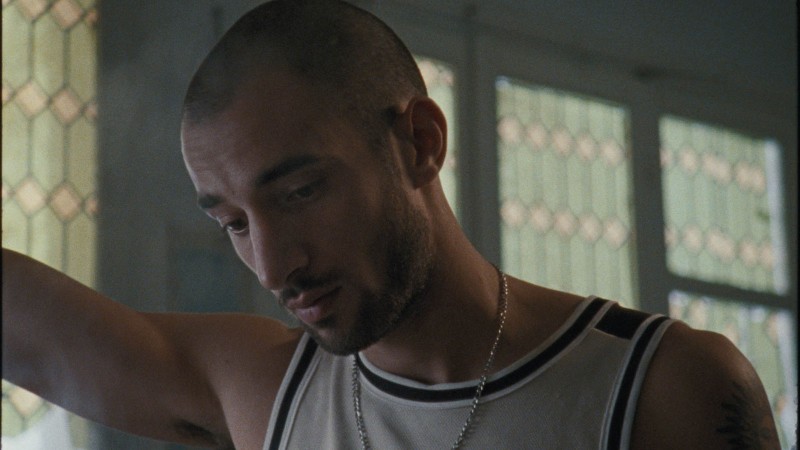
Visually, the film is stunning. The cinematography, helmed by Mihopoulos, creates a claustrophobic atmosphere that underscores the characters’ entrapment. The environments are lived-in and authentic, with every element feeling as though it belongs in the world the film depicts. The urban elements of skating, hustling, and poetry mistaken for rapping add layers of realism to the narrative, portraying the characters’ descent into a world where survival comes at the cost of their humanity.


One of the film’s most powerful elements is its ability to build suspense and tension through a lack of information and constant obstacles. The audience, much like the characters, is left in a state of uncertainty, never knowing if something has worked or how close the cousins are to their goal. The goalpost is constantly shifting, with every potential solution leading to more challenges. This narrative technique keeps the audience engaged, rooting for the characters even as their circumstances grow more dire.

The performances by Bakri and Sabbah are nothing short of extraordinary. Bakri, in particular, captures the essence of Chatila’s internal struggle, portraying the fine line between his natural personality and the behaviours he adopts out of necessity. The warmth between the cousins, despite the harshness of their environment, adds depth to their relationship, making their story even more poignant.


The film refrains from making overtly political statements, but the context and the characters’ experiences naturally bring political issues to the forefront. For Palestinians, whose homeland was taken and whose lives are marked by invisibility in exile, the film’s portrayal of time running out resonates deeply. The characters are depicted with complexity, revealing the contradictions that make them human. Even as they are driven to morally questionable actions, they are shown as individuals with agency, navigating a world that offers them few choices.

To A Land Unknown is a film about survival in its rawest form. It’s a story of people pushed to the brink, where good intentions are often overshadowed by the need to survive. Yet, despite the bleakness of their situation, the warmth of the characters and the depth of their bond offers a glimmer of hope. It’s a film that challenges its audience to look beyond the surface, to understand the complexities of human nature, and to recognize the resilience of the human spirit, even in the face of overwhelming adversity

To a Land Unknown is one of 105 films screening as part of the Whānau Mārama New Zealand International Film Festival (NZIFF)

The full programme of 2024 films is outlined here.
Tickets can be booked online at www.nziff.co.nz