NIGHT RAIDERS (2021)

The year is 2043. A military occupation controls disenfranchised cities in post-war North America. Children are property of the State. A desperate Cree woman joins an underground band of vigilantes to infiltrate a State children’s academy and get her daughter back. Night Raiders is a female-driven dystopian drama about resilience, courage, and love.

To put it bluntly and succinctly, Night Raiders is a mixed bag. This dystopian flick, written in 2015 Pre-Trump and pre-COVID, manages to blur the lines of reality and speculative dramatization well. If the film had been created and released back in 2015 it would have generated a much larger impact, but in 2022, the idea of building a border wall, increased surveillance and governmental control, locking up children away from their parents, and creating a division between the wealthy and those in poverty through mandates...it all feels very familiar. 


These elements do actually work well to assist the audience to relate to, and empathize with, our protagonists. That familiarity of events, effectively questions the knowledge and awareness that this film is occurring two decades in the future. It feels like it very much could be happening now. Considering the history of Canadian Indian residential schools, is not dissimilar to Australia's Aboriginal Stolen Generation, or New Zealand's own history of Māori abuse at the hands of our government's Oranga Tamariki organization. All examples of the nation's powerful and elite taking the land and children of the Indigenous populations, in the name of "developing" or "saving" them, in acts that lead to cultural persecution, erasure, and eradication.

The film envisions lofty political and cultural commentary, and builds a convincing visual dystopia, effectively categorizing each side of the conflict by contrasting the indigenous Cree populations living in the lush bush and forestry with the powerful government that controls the dead cities, steeped in unsaturated brown and grey colour palettes. 


Director and screenwriter Danis Goulet successfully uses our sense of familiarity to quickly create a world that we recognize but has twisted elements in a fashion that creates a lot of intrigue and mystery. Goulet is sparse and selective in the information and context that they provide and it creates a world that the audience wants to know more about. To its detriment, Night Raiders is so coy with the explanations for its differences, that you leave the theatre with more questions than answers. We are faced with a number of exciting events and pathways, however, while the film progresses, the character development and context for these decisions are arbitrary and underdeveloped.


The protagonists are also underdeveloped, with extremely minimal characterization. the film hits all of the dystopian thriller plot points but struggles to integrate its indigenous elements fully into the story. With a number of characters, locations, and interactions throughout a minimal 100-minute runtime, relationships and related interactions are rushed. It is unknown whether certain characters were added late in the process, or their arcs stripped from the film in the editing process, but they are left feeling out of place and forced.


Our mother-daughter duo, Niska and Waseese (portrayed by Elle-Máijá Tailfeathers and Brooklyn Letexier-Hart respectively) are the highlights of the film. Niska's visual appearance is gaunt, and her drive is unavoidable, unfortunately, no time is allowed to fully develop her emotional connections and motivations, leaving her character an empty shell that is otherwise being passively pushed from one situation into another. Waseese's development is quite well-balanced when you bear in mind that she is a child, her appearance degrading as the film progresses under her incarceration.


With intriguing visual environments and effectively executed special effects, Goulet has done wonders with world-building. It is a world that the audience wants to know more about. Great acting from Tailfeathers and Letexier-Hart can't make up for thin characterizations and a tick-box dystopian thriller structure. Still worth a watch, as a reminder of the capabilities of a powerful body that does not respect its inhabitants equally, but you can't help but feel that there is a lot of context and character development sitting on the cutting room floor in favour of a short run-tim, waiting for their chance to shine in a director's cut.
 
Night Raiders is in cinemas from March 24, 2022

THE SHOW (2020)

 
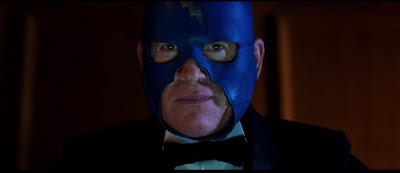
A man's search for a stolen artifact leads him to the haunted town filled with Voodoo gangsters, masked adventurers, Depression-era private eyes, and violent chiaroscuro women.

Alan Moore is known, among other things, as the writer of many comics such as The League of Extraordinary Gentlemen, V for Vendetta, Prometheus, Watchmen, Batman: The Killing Joke, and The Swamp Thing. The Show is based on the works of Alan Moore, specifically the short film series Show Pieces that Moore worked on with Mitch Jenkins (who has also returned to direct this piece). With returning characters and continuations of the pre-existing series history, if Show Pieces is not something you are familiar with, you are in for an unusual experience.


The Show isn't completely inaccessible without knowledge of the world ahead of viewing, but it is certainly an advantage. While the piece spends most of its runtime with exposition and heavy-handed monologue, the world is full of weird and wonderful characters; all with their own peculiar and wonderful powers and abilities, creating an overload of information to take in with little disclosure on how relevant or necessary that knowledge is to the narrative of the film.


With so much information needed for the convoluted plot and a large amount of misdirection and red herrings, The Show is awkwardly artistic and leads the audience down a rabbit hole of unrelenting nonsense. Lacking focus, the film has very little in terms of a narrative direction, simply leading its protagonists passively through a series of experiences and introductions where more information is fed to them until the final reveal. There is a certain level of charm, and the creativity is undeniable, but the convoluted plot will give the audience a hard time keeping up, and the rapid introduction and discarding of characters will provide the audience nothing to hook into or care about. Riding the line between absurd nonsense and intellectual dissonance, the deep line-up of characters are unfortunately stuck with nothing significant to do.


In a mysterious world of eccentricities, outrageousness, and fantastical personalities, our lead never manages to hold enough charisma to keep the interest of the audience. Motives remain unknown, the lines between reality and fiction intertwine, and Dennis the Menace is running around with as much control as a plastic bag on the set of American Beauty; simply along for the ride. While it lacks focus, pacing, and charisma, the peculiarities and obscenities are reminiscent of the unfiltered mind of a child, with the ideology that all ideas are good ideas. The Show is so far from predictable that it still keeps the audience in their seats, if for no other reason than to see how weird this world can be. 

The Show is in cinemas from December 16, 2021

ROSE PLAYS JULIE (2019)

 
In this intimate exploration of identity, trauma, and power, a young woman seeks out her birth mother, inadvertently triggering a string of events that change both their lives.

Every once in a while, you come across a film that appears to tick all of the boxes. It explores a dark or controversial topic, it avoids unnatural lighting and exuberant cinematography, it prefers to utilize silence over dialogue, in fact from a critic's point of view, Rose Plays Julie would be an ideal dramatic film. When you look at the film outside of the lens of judging it on the quality of its parts, you quickly realize that the effect of the parts combined doesn't create something spectacular. Not even on par. Rose Plays Julie has everything it needs, but a critical element turns what should have been a classic, into a bore.


The premise of the film has solid dramatic foundations with a journey of self-identity; a search for her birth parents. An unexpected piece of information knocks the film off of its tracks and sends it off on a tangent away from drama, towards the crime and thriller genres. It never quite makes it there, however, with the pacing coming across like a game of golf; moments of energy separated by long periods of silence.


From a cinematography perspective, the film is well-composed, with slow push-ins and push-backs highlighting the emotional cues of the script. The use of natural lighting (or lack thereof, in many cases) and cold colour-palette give the film a grounded and authentic atmosphere, which turns eerie considering the subject matter.


The issues with the film come from one element though; the casting. Our main protagonist (played by Ann Skelly) simply lacks any form of charisma or emotional content. Rose lives in a state of shock, rarely closing her mouth, and spends so much time staring into nothingness, that it creates a dull and repetitive feel that garners diminishing returns as the cinematographer pushes in and pulls back again and again. In a world that is largely devoid of people, where the streets are empty and the buildings unused, the personality and charm of the film relies entirely on the personality and charm of the acting team. 


The film is so full of supposed emotional contemplation that it completely stalls any attempt at developing its protagonist. In fact, the film isn't even about Rose (or Julie), the story revolves around her mother, Ellen (played by Orla Brady). Rose doesn't even get a resolution to her identity crisis. Brady is the emotional anchor of the film, around which the entire film's plot revolves around, whose performance is the shining beacon of hope in the entire 100-minute runtime. Casting woes continue with the casting of Aidan Gillen. Anyone of the millions of people who have seen his performance in Game Of Thrones will struggle to hide their lack of surprise as to his role in the film. Realistically a poor choice for the role, when the actor has been so heavily typecast.


The premise is dark, uncomfortable, and unsettling, but the exploration of the topic leaves a lot to be desired. With one-note characters, the direction of the film is predictable, with extended moments of contemplation falling on deaf ears when the moment provides nothing for the audience to ponder. the film takes three different types of people with unique forms of alter egos and then proceeds to do little with them. If you enjoy slow films, this could be worth a watch for Brady's performance alone, but if a lack of pacing is a deal-breaker, then it may pay to give this a miss.

Rose Plays Julie is in cinemas from December 9, 2021

MURINA (2021)

Tensions rise between restless teenager Julija and her oppressive father Ante when an old family friend arrives at their Croatian island home. As Ante attempts to broker a life-changing deal, their tranquil yet isolated existence leaves Julija wanting more from this influential visitor, who provides a taste of liberation over a weekend laid bare to desire and violence.

Boundless yet restrictive, calm yet relentless and powerful, Murina portrays both the open waters and a father in the same light; things that our protagonist is both comfortable with and afraid of. Significant parts of her life, familiar but ultimately representing prisons keep her from the freedom she desires.


Gorgeously shot, Murina is a slow burn that manages to remain emotionally charged throughout, despite an outwardly constrained set of events. A young girl, Julija (Gracija Filipovic) lives trapped on a beautiful Croatian island home, living a cyclical, repetitive set of events from day to day, a schedule set by her father. Longingly wanting to join the fun and excitement of the tourists that visit and then leave towards the unknown, Julija finds herself in a rebellious stage of life, pushing back on the boundaries that have been put in place by her controlling, and overprotective parent. 

A new temporary addition (New Zealand's own Cliff Curtis) to the family brings buried history to the surface and puts the spotlight on what could be a potential for escape, for young Julija.


With a minimal cast and limited locations around this island home, director, Antoneta Alamat Kusijanović, makes a strong choice to consistently explore the emotional narratives of each character. Constantly building and strengthening the core foundations of each character with every interaction. The four main characters are surprisingly complex, and anything but one-dimensional, portraying a variety of personalities depending on who they interact with. Cliff Curtis' Javier is to Julija, the loving uncle that could help her get away from the island, or to Julija's mother Nela (Danica Curcic), Javier is the one that got away; a romantic connection rekindled. To Julija's father Ante (Leon Lucev), however, Javier is a threat to the patriarchy of the family, while an opportunity for him to escape the island himself.


Julija finds herself torn between these two men in her life, and uses both her own interactions and the observed interactions of her mother, to figure out what path she needs. Both men represent differing extremes of masculinity, one that uses physical and emotional violence to ensure the submission of the women in his life, the other using money, stories, and charm to hide the pain in his life. Spurned by the calling of the outside world, she bates her father who exercises his power and control whenever it is threatened.


Surrounded by water, the film spends a good portion of the film diving deep into it, providing quiet moments for contemplation as the troubles of the world above cease to exist. Moments for Julija to explore jealousy, fear, resentment, envy, oppression, aggression, charm, and desire, without the external forces of her parents acting upon her. Her peaceful place, marred by her father's presence every morning; a presence that she comes to despise.


A slow burn, but emotionally compelling, Murina offers a coming-of-age story that beautifully encompasses the need to recognize and break away from oppression in a more realistic and grounded sense. Beautiful lighting and cinematography frames the delicate internal interactions well. Well worth a view.
 
Murina has been selected for screening at NZIFF 2021, now opening in Christchurch on Friday 29 October, Wellington opening on Thursday 4 November, and Dunedin on Friday 5 November, followed by the nine regional centres, before a nationwide release next year.

THE HATTON GARDEN HEIST (2019)

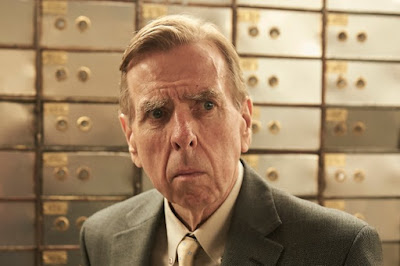
The Hatton Garden Safe Deposit heist during the Easter Bank Holiday weekend of 2015 captured the attention of the British public and media alike. A fascinating insight into the true events of the Hatton Garden jewellery heist and its aftermath, Hatton Garden tells the story of the largest burglary in British legal history.

Heists have always been a fun genre of film, where the audience gets to enjoy the intrigue of committing a significant crime. Often overly convoluted plans are carried out by super suave and charismatic individuals who carry out heists for the thrill of succeeding more than the actual financial gain. The Hatton Garden Heist, on the other hand, puts together a different scenario entirely. Instead of fit, young, and charming individuals getting together, this is a very simple heist conspired by a crew of geriatric men. A complete flip on the usual expectations, this four-part mini-series piques the curiosity further as it is based on true events that occurred six years ago.


The ability to carry out a heist in this modern technologically advanced day-and-age with a crew that barely have the physicality to tie their own shoes, have to monitor their sugar intake, and have trouble going to the toilet, is an exceptional task, and forms a very gripping first few parts. The reality of the situation is a much simpler affair than what Ocean's 11, Mission Impossible, or The Italian Job would lead you to believe. It's the simplicity that highlights the exquisite work that the series writers Jeff Pope and Terry Winsor have put into building up the characters of Kenny, Danny, Brian, Basil, and Terry. 


It's the brilliantly grounded way in which these characters move and react with each other that builds a solid history between characters from the smallest of interactions. The apathy, irritation, and varying levels of respect and loyalty between each person create an incredibly authentic team of criminals. What is also very well put in place, is the focus on their familial commitments and health issues as a manner in which to bring the audience to empathize and sympathize with the crew. While our attitude towards each member changes over time, it all serves to create an engaging story; regardless of whether we want them to succeed or fail.


It all together creates a well-written mini-series. A realistic tone set up with suitable cinematography, and a rabble of not-necessarily-likeable-but-understandable-and-relatable characters. Granted this is my first time learning about The Hatton Garden Heist, but it was certainly a gripping tale.

The Hatton Garden Heist is premiering on AcornTV exclusively in New Zealand

THE ICE ROAD (2021)

After a remote diamond mine collapses in the far northern regions of Canada, an ice driver leads an impossible rescue mission over a frozen ocean to save the lives of trapped miners despite thawing waters and a threat they never see coming.

Liam Neeson is really doing everything in his power to maintain his legacy as an action hero, after his success with iback in 2008. In the last couple of years, we've seen him in The Marksman, Honest Thief, Cold Pursuit, The Commuter, and now The Ice Road. What sort of murderous situation has his wholesome character been unwittingly drawn into this time?


To be perfectly honest, the first act of this film is a stroke of genius. At least as far as New Zealand goes, we love Laurence Fishburne (The Matrix, John Wick, CSI), we love Liam Neeson (Taken, The Grey, Schindler's List), we love The History Channel's Ice Road Truckers, and the premise really hits home as New Zealand was rocked by the Pike River Mine tragedy that took the lives of 29 miners in 2010 (their bodies still have not been recovered) and led to legislation improvements that resulted in a new Health & Safety at Work Act. The sequence of events that occurs is something that every single person in the construction industry has been taught about, and it resonates with us as a country.


Combining three things that we love with a premise that mirrors the national tragedy that led to the largest overhaul of health and safety legislation in 25 years? Brilliant decisions. Does The Ice Road end up scoring a hyperbolic 110%? Unfortunately, by the time it crosses the finish line, it's long ago run out of fuel and leaves the audience feeling...meh. 


It's an incredibly disappointing turn of events. A highly relatable sequence of events, with some very well-known and likeable names in the cast list, and yet, some poor writing choices result in a near-perfect first act going to waste. Fishburne and Neeson do a commendable job, turning one-dimensional characters into something worth investing in. They turn "brother of mentally impaired man" and "truck driver" into well-rounded characters that have priorities, ideals, and both ethical and moral standards. All of this is done in a few scenes, with minimal dialogue setup; all through some reasonable direction from Jonathan Hensleigh, but mostly from the pedigree of the actors.


At some point, however, Hensleigh was not content with his story. Not content that he could pull off a Togo and have a film that centres entirely on the idea of traversing this inhospitable and questionably safe ice road, for 30 hours straight, out-of-season, and while carrying 700,000 pounds of cargo, when the act of stopping, moving too fast, or too slow, can sink you to the bottom of the water in seconds. Hensleigh was unable to bring tension to this premise without the introduction of actual physical villains. In a decision that reeks of letting a 9-year-old come up with the story, The Ice Road takes a drastic turn in the second act; one that it never fully recovers from. The creation of a physical secondary villain element completely sweeps the titular threat under the rug. Everything that the film was building up until that point is essentially disregarded for some caricatures so poorly developed that you can see them twirling their metaphorical moustache in every scene they are in.


The film attempts to balance two sides of the equation at once--the truckers traversing the thinning ice road, and the miners attempting to stay alive--and for what it's worth, the miners' perspectives are not ignored. The story delves into not just the immediate causes of the tragedy, but also the underlying systemic problems that meant the inciting incident was not only likely but guaranteed to happen at some point. It is the other aspect of the natural tension that is undercut by Hensleigh's script, which keeps pushing for more and more "Hollywood" action. The tension between prioritizing production over safety is a balancing act that every high-risk business undergoes on a daily basis. Balancing financial costs, severity, likelihood, available technology, etc., but the script wants none of it. Hensleigh's The Ice Road wants action; car chases, snowmobile, and motorbike fights, shootouts, hand-to-hand combat. It's all in there, it's all unnecessary, and it's all poorly paced.

It all culminates into one of the most anticlimactic fight scenes I've ever witnessed. 


It's not all bad though. The first act is top-notch. I didn't care about any trite platitudes that reek of a first-draft script because Fishburne and Neeson lifted it out of the gutter and gave it heart. The musical compositions were grand and epic with a strong orchestral focus; worthy of a cross-country adventure-thriller. The cinematography was right where it needed to be; lots of panning wide shots with gorgeous landscapes, and closeups for the tense action scenes (despite my seemingly strong hatred of the use of action written into this film, there is an exceptional scene with some drifting trucks that looked and felt amazing to watch). 


There was an opportunity for a tense dramatic thriller in The Ice Road, but the opportunity was squandered to make way for a more mainstream and accessible action flick. It ends up being above average, but that's a discouraging endpoint for a film that starts off so well.

The Ice Road is in cinemas from August 26, 2021
Originally posted to: https://djin.nz/Kr8894

JUNIPER (2021)

When a self-destructive teenager is suspended from school and asked to look after his feisty alcoholic grandmother as a punishment, the crazy time they spend together turns his life around.

The New Zealand film industry is churning out some movies that really tug on the heartstrings; really emotional pieces. Juniper itself is quite a timely film given the recent success of the Euthanasia Referendum in the most recent election and puts forward a kiwi perspective on topics already covered by such films as Blackbird and Supernova. A film that we as a country can fully relate to, that puts coming to terms with death and one's own mortality into terms and framing that we can easily understand. 


The characters are rather basic but surprisingly well-written by director-writer Matthew Saville, essentially using stereotypes of the absentee father, the alcoholic grandmother, and the rebellious youth, to arrange and orchestrate some solid character development through their interactions. Our two main leads Ruth and Sam (played by Charlotte Rampling and George Ferrier) conflict with each other at many points, in this well-coordinated narrative play; this is not an amateur "one person develops at a time" story (which is as believable as a street fight where the villains attack one at a time in single file), instead we have two dynamic development arcs, that move concurrently in two different directions, clashing as their personality traits switch between complementing and punishing each other.


On the surface, this looks like a wholesome film that has two headstrong people learning to get along, but in reality, the content is much deeper. Juniper is an exploration of abandonment, isolation, loss, depression, guilt, mourning, loss, suicide, and Saville isn't pulling his punches; death is both a source of peace and unrest.


A beautifully mirrored pair of interlinked stories that forces you to look beyond face value. Not every person will tell you how they feel. Bias is everywhere; Motivations and conflict. And one must be open and receptive to have any chance of maintaining control of life. Saville captures the kiwi spirit brilliantly through Ferrier; the crests and troughs that come with our isolated yet passionate compositions, and our veiled inability to open up and express ourselves without excessive alcohol consumption. 


The cinematography is well-executed and suits the atmosphere of the film, using only natural light to add authenticity to the already grounded nature of Juniper. There are many scenes we can't even make out the faces and you can barely see the movements, but all adds to the intrigue and genuine sense of the film. With a lot of slow scenes and awkward (or hostile) interactions, the pacing of the film can be quite lethargic and slow. It allows for a lot of quiet times of contemplation, times to think and come to terms with the events occurring. 


The palpable and undeniable honesty of Juniper is what makes it hit hard. Whether it's a mother or a grandparent, we have all lost someone at some point, and the interactions and set designs build such an authentic environment, that the audience will not be able to avoid thinking of their own family members being in this situation. This may trigger. Much like in last year's Bellbird, the sense of loss is inescapable. Beautiful, but suppressed.

Juniper is in cinemas from August 26, 2021
Originally posted to: https://djin.nz/Kr8893