RICHARD JEWELL (2020)


During the 1996 Summer Olympics in Atlanta, security guard Richard Jewell discovers a suspicious backpack under a bench in Centennial Park. With little time to spare, he helps to evacuate the area until the incendiary device inside the bag explodes. Hailed as a hero who saved lives, Jewell's own life starts to unravel when the FBI names him the prime suspect in the bombing.

There is nothing more infuriating for a lower-to-middle class person (such as myself) than watching someone get railroaded for caring and wanting to help people. To see someone persecuted and watch the blind trust they have--that the authorities have their best interests at heart--used against them, dragging their name through the mud. This is the true story of Richard Jewell.


Right out of the gate, we need to show appreciation for Paul Walter Hauser's performance as the titular character, Richard Jewell. Richard is a kind-hearted person that only wants to work hard, and help and protect people. These are super relatable and sympathetic character traits, and Paul Walter Hauser does an exceptional job as this naive, mild-mannered and surprisingly even-tempered man. There is such authenticity in the emotions that he portrays and the goodness in his heart, that the audience cannot help but go along for the ride and hope that things turn out well for the character.


The protagonists are really well portrayed, with some brilliant supporting performances from Sam Rockwell and Kathy Bates. Bates plays Richard Jewell's mother, who is absolutely torn up emotionally at the prospect of losing her son. The real driving force of the film comes from the dynamics and relationship between Paul  Walter Hauser's Richard Jewell, and Sam Rockwell's Watson Bryant. Where Richard has deeply-rooted respect and admiration for all law enforcement personnel, and an irrational willingness to do whatever it takes to help the agencies trying to hang him, Watson is the rational, but outspoken lawyer that has the answers, but has one arm tied behind his back by Richard's own actions. It's these opposing personalities that create a strong buddy-cop dynamic.


The antagonists in the film have much less depth, almost caricature-like, only missing a moustache to twirl, there is little humanity to Olivia Wilde's promiscuous reporter character, nor Jon Hamm's hammy and narrow-minded FBI agent. While attempts were made to give the reporter an arc, there isn't enough content to warrant any form of redemption.


Richard Jewell starts off on the slow side, jumping through time to give a brief backstory of the titular character, before beginning the measured journey towards the bombing. Once that point has been reached, the film's pacing picks up significantly, and not an issue for the remainder of the film. With a 131 minute runtime, Richard Jewell feels long, but never feels too long. Every action, every detail, it grabs your attention. It will make you want to research the event yourself afterwards to verify that the absurd actions actually occurred. There is nothing too flashy from Yves Bélanger in terms of cinematography, and Arturo Sandoval's musical score is very subtle, but the film does have a nice colourful palette that still has a desaturated look to it, which creates a nice period feel (1996 still feels very recent).


Thematically speaking this is the story of how a man was judged by the media and the government before facts were determined, which leads to cherry-picking information that conforms to the preconceived idea. Providing a very detailed visual display of the negative effects misinformation can have on the accused's life (and that of friends and family too). The newspapers were a powerful media form in those days, with their readers trusting everything printed as 100% fact. Nowadays, the transition has occurred to online sources but with that extra accessibility, the damage that can be done by the court of public perception has grown significantly despite the reliability and frequency of misinformation being much higher. With the anonymous nature of the internet, it's timely to have this visual reminder of the effects misinformation can have.


Richard Jewell has a level of injustice that twists your gut, with protagonists that you truly care about. Stellar performances from Hauser and Rockwell make you want to breakdown in desperation, finely balancing the tension and frustration with organic elements (mostly stemming from Richard's naivety and demeanour). The humour manages to diffuse the excess angst and emotion to keep things from getting too dark, while still maintaining a well-grounded story. Look past the non-descriptive film title, because this is well worth checking out. Incredibly powerful.

Richard Jewell is in cinemas from February 13, 2020
Originally posted to: http://djin.nz/Kr8554

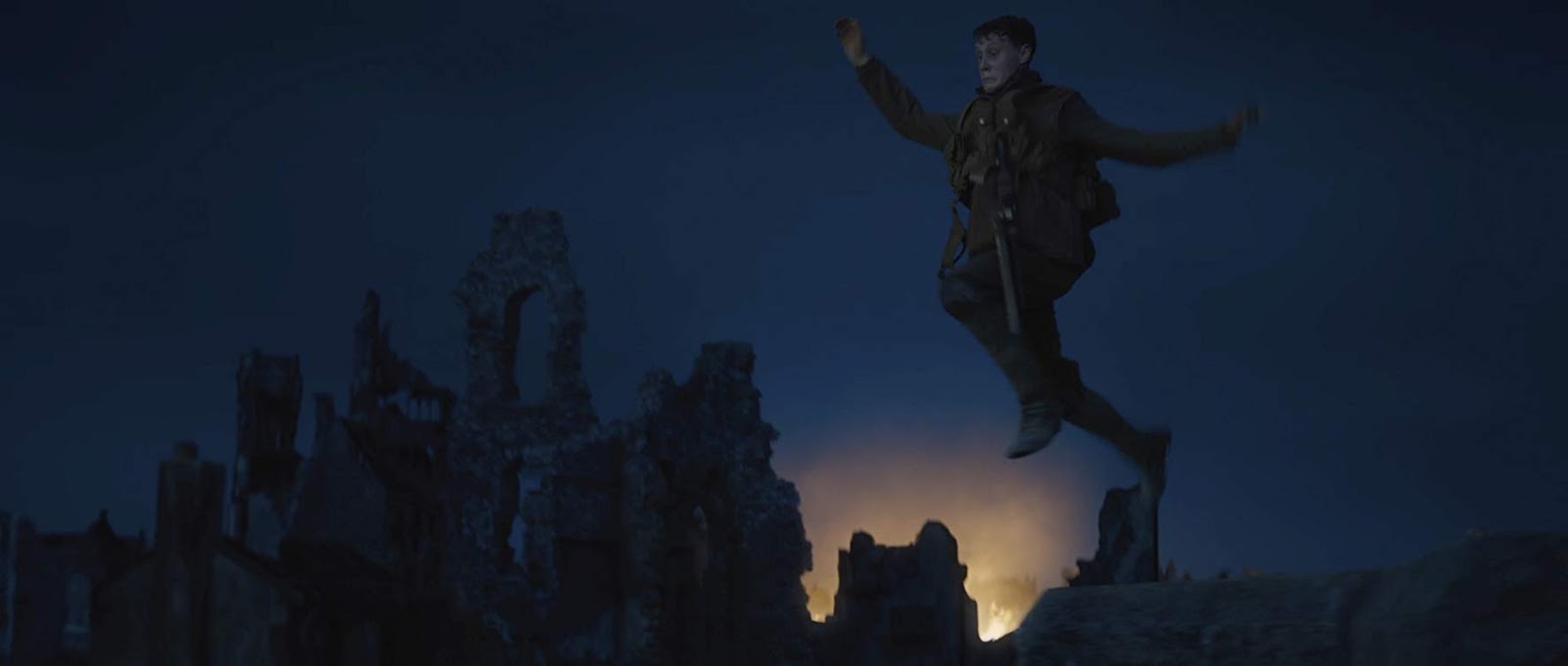
1917 (2019)


During World War I, two British soldiers -- Lance Cpl. Schofield and Lance Cpl. Blake -- receive seemingly impossible orders. In a race against time, they must cross over into enemy territory to deliver a message that could potentially save 1,600 of their fellow comrades -- including Blake's own brother.

The hype machine is in full throttle for Sam Mendes latest piece, 1917. With award nominations and award wins, 1917 has an Avatar-size expectation attributed to it, and one can’t help but think that comes to the detriment of the film.


The specific style in which the film is shot is reasonably well-executed, but the amount of marketing down bringing awareness to the audience has really had the opposite effect in many cases, with members of the audience specifically looking for the points in the film that have been edited to create the style that Mendes wanted. The unnecessary drawing of attention to it ends up taking the audience out of the story, looking for evidence of cuts, rather than focusing on the story itself. I can put my hand up and say that yes I definitely spent a fair bit of time, initially, counting obstructions and lighting changes.


The direction in which the cinematography takes is the most noteworthy feature of the film but is in no way flawless. There are times in which you feel like a third character in the story, following our main two protagonists, following behind them, pulling ahead and looking back, sitting opposite them and looking around, and it is a very visceral experience. This is not a consistent method though, with the camera suddenly pulling away to provide some more categorical cinematography shots, sweeping over mountains and waterfalls, or hovering over waterbodies. All of a sudden it looks gorgeous, but you no longer feel like you are a part of the experience.


The general shooting style that 1917 goes for also brings its fair share of completely average shots with subpar framing; something that is surprising to get from cinematographer Roger Deakins (O Brother, Where Art Thou?, The Man Who Wasn't There, Sicario, Blade Runner 2049, No Country For Old Men, Skyfall). Getting scenes with the protagonists’ heads chopped off by the framing gives the impression of a cinematographer that is being overly restricted by the direction.


There are several scenes that are absolutely exceptional. One of the scenes that was shown in the trailer is one of the best and shows how well coordinated the team can be, with an indomitable score that gives the audience goosebumps. The milk scene plays with perspective beautifully, and the city-run is well choreographed and haunting in its visual flair. These scenes do not justify using that one gimmick for the entire film, however, and one can’t help but feel that some of the potential narrative potentials were lost, purely for the sake of committing to the style.


From a narrative standpoint, 1917 is rather lacking. Our protagonists have very little in the way of backstory; one has a brother, and the other does have some ties revealed later in an off-handed manner. With the mission to go from point A to B in X amount of time, there is not a lot to encourage engagement from the audience. It is another aspect that the film’s direction affects, with the strict chronological linearity preventing a lot of development of the characters. The camerawork following the protagonists combined with the brilliant set designs and attention-to-detail of the costuming does help immerse the audience in the environment, but without character development, the audience does not care about the plight and safety of the protagonist as much as they should.


What the film does do really well, is build tension. With better development it would have been even stronger, but as it stands, the audience can’t help but feel like the protagonists are constantly in peril. A great visual example of Murphy’s Law, if something could go wrong, it will go wrong, and it does effectively keep the audience on the edge of their seat. This isn’t a huge action-packed thriller. There are quiet moments, there are tense times, and there is plenty of silent contemplation. It is a character study, of strangers thrown into a situation they would rather avoid, but stepping up to the plate anyway.


The film has some big names making cameo appearances; from Benedict Cumberbatch (Sherlock Holmes, Doctor Strange), to Dean-Charles Capman and Richard Madden (Game of Thrones), Colin Firth (Love Actually, The Kingsman), and many more. In all honest, while their acting was fine, it would have been more immersive to have more unknown actors in the roles. Their presence added nothing to narrative.


Overall, it was an enjoyable flick. It works well to create that sense of danger and tension, but falls short when it comes to character depth. It has a gimmick, which creates some magical scenes, but also leads to many less than engaging moments along the journey. While I would consider it a good film, I can see how a couple of the scenes would convince others that this was a great film.

MEETING GORBACHEV (2018)


Mikhail Gorbachev, former president of the Soviet Union, sits down with filmmaker Werner Herzog to discuss his many achievements. Topics include the talks to reduce nuclear weapons, the reunification of Germany and the dissolution of his country.

Meeting Gorbachev is directed by André Singer and Werner Herzog; the former, a British anthropologist and documentary-maker, the latter, a prolific German film and documentary director. Together they have compiled a love letter to Mikhail Gorbachev, the last leader of the Soviet Union before it's dissolution.


Approaching 90 in age, Meeting Gorbachev comes across as a highlight reel, looking at the achievements and accomplishments that Gorbachev has achieved in his political career. Herzog conducts most of the questioning during the interview sessions and does not attempt to hide his reverence for Gorbachev. It creates a very one-sided bias, with Herzog having such a strong, positive perception towards the subject of the documentary. While this lack of objectivity could ultimately be seen as a negative aspect of the piece, the bias is made apparent from the very start, and still has its positive elements.


Meeting Gorbachev does cover the usual documentary angles, covering his early life and upbringing, but it spends the majority of its runtime focusing on his time in the Soviet Party. Much of the focus is on what would globally be considered the big achievements of Gorbachev's reign; the denuclearization agreements between the Soviet Union and the USA, improving relations with the Western World, and the Reunification of Germany. Much time is spent on the reunification of Germany, thanks to Herzog's heritage and his own emotional connections to the event.


Herzog is potentially what prevents Meeting Gorbachev from being a much better documentary than it is. His personal connections create emotional questions that attempt to lead Gorbachev towards specific answers; something that Gorbachev avoids quite frequently. The whole interview component comes across like the president of a fan club interviewing their idol. No mentioning of any negative events (Chernobyl is barely mentioned), nothing but constant praise, and a lot of leading questions that feel overly premeditated as they lack organic flow and progression. It also forms a documentary with little in the way of narrative drive or direction.


The timing of the documentary doesn't immediately feel rightly placed. At least not until the latter half of the feature. Once Gorbachev is able to speak with more freedom about his thoughts on what he accomplished, he opens up on a lot of interesting elements around his role as the middle-man between the Soviet Union and the Western Democratic world. Meeting Gorbachev becomes a peek behind the iron curtain, highlighting how it took two rational leaders that were fully aware of how close they were to nuclear annihilation, to forge an agreement to end the arms race between the Soviets and the US. While no names are mentioned, there is a clear note of concern around the behaviour of certain world leaders currently in power, that are again proliferating their nuclear arsenals.


There is a clear, well-thought-out intelligence in Gorbachev. His ability to maintain an open mind and his clear concern for the people of his own country helped the man to run the gauntlet on many occasions, even managing to beat out a military coup thanks to his popularity. And yet, the man is still reviled by so many and considered a traitor by others. There is a clear sympathy to be had for this man who was looking to ensure that all of his people were well-fed and aiming high for world peace. 


While clearly unbalanced, and narratively wavering, there are few people alive that are willing to talk about the Cold War from the perspective of the Soviet Union. While one-sided in its portrayal, and limited in its sources, it is nonetheless a humanizing perspective and an engaging one at that. 

Meeting Gorbachev is in cinemas from January 23, 2020

THE LEGEND OF BARON TO'A (2020)


Fritz, a Tongan entrepreneur returns to his old neighbourhood and inadvertently causes the theft of his late father’s valued pro wrestling title belt by some ruthless gangsters led by ‘man-mountain’ Tahu. When negotiation and diplomacy fail to get it back, he is forced to embrace his father’s legacy to reclaim the title.

From the producers of the Pacific Island portmanteau film, Vai, and Māori portmanteau film, Waru, comes the directorial feature film debut for Kiel Mc Naughton. The Legend of Baron To'a has a cast made up entirely of Pacific Islanders and Māori such as Uli Latukefu (Alien: Covenant), Nathaniel Lees (The Matrix Reloaded), Jay Laga'aia (Star Wars: Episode II & III), John Tui (Fast and Furious presents: Hobbs & Shaw), as well as Shortland Street alumni Shavaughn Ruakere, Fasitua Amosa, Duane Evens Jr, and Lotima Pome'e aka General Fiyah. 


The Legend of Baron To'a is an intriguing film. As far as action-oriented comedies go, the premise sounds like a generic "progressive vs traditional" film, however there is an inconsistent tone that becomes increasingly apparent by the third act. The style of humour and the breadth of the story actually could be seen as reaching for comparability to the likes of the cult classic, Hot Fuzz, but The Legend of Baron To'a is hampered by its odd tone and conflicting character elements.


Its characters are as one-dimensional as they get, with only two having any form of development arc. Protagonists and Antagonists are so clearly demarcated and static that there is little to draw the audience in with. Nothing to make us want to care about what we are seeing on screen. To an extent, it is this over-the-top cartoonish style of character that helps the film achieve the extent of humour that it does. With an ever-present sense of hostility and danger on display throughout the film's runtime, these rather bizarre interpretations and impersonations of cultural stereotypes are what prevents the first two acts from becoming too "real".


It is this third and final act that loses the comical exterior and reveals the real tense and concerning reality of what is on display. The climax of the film involves fighting to regain the wrestling belt, but it does not come in the form of a wrestling belt. It comes in the form of highly organised and premeditated aggravated assault. With a nation that is widely known to have increased domestic violence call outs when we lose a rugby game, the way in which it is portrayed in a film is highly important. To have our protagonist using weapons to attack people in the street in a clearly not defensive manner, and to go further by involving children in the ruckus, the amount of glorified violence can become somewhat unnerving. 


The fact that the majority of the film takes place within a single cul-de-sac poses difficulties in keeping the scenes feeling fresh, and the cinematography is well-executed taking advantage of as many angles as possible, with a colour palette that keeps the visual element well-grounded. 


With the level of acting class involved in the film, the end product does seem to place responsibility on the direction and screenplay. The lack of character development leaves little in the way of an emotional connection for the audience to engage with; the only exceptions being some great performances from Shavaughn Ruakere and Duane Evens Jr. I wanted to know more about why Baron To'a was the symbol that he was, and how this history affected the community, but the plot is only skin deep and does not explore this further. 


The end result is a mediocre film that will still get some laughs from the audience but does raise concerns over how it displays its violence. The cast is great, but the choice of story and message is more than a little questionable.

The Legend of Baron To'a is in cinemas from February 20, 2020

SEBERG (2019)


In the late 1960s, American actress Jean Seberg grew bored of acting and became enthralled with the activist politics of the era, particularly the Black Panthers.

Ever since her spell as Bella in the Twilight film franchise, that Kristen Stewart has been hampered with the stereotype of an emotionless actor. Many memes have been shared of her headshots supposedly showing a range of emotions but someone has copy and pasted the same image into all of the slots. It's a form of online victimisation that has no doubt negatively impacted her Hollywood career to a certain extent. In reality, it is not so much her stoic stare, but her trademark overbite that has really given her this reputation. the overbite is gorgeously adorable but it draws your eyes away from hers, and that is the problem; she has incredibly emotive eyes, and there is no better example than in Benedict Andrews latest feature film, Seberg


Benedict Andrews is relatively new in the directorial world, with only one feature film prior to this (Una), and a couple of live theatrical productions. On the other hand, Joe Shrapnel and Anna Waterhouse have carved a niche with their experience in writing biographical screenplays (previously involved with Frankie & Alice and Race). These three come together in an attempt to recreate the deceitful actions of the FBI that led to the death of the French New Wave actor Jean Seberg in the late 1960s.


From a visual standpoint, Seberg is stunning. Following Once Upon A Time in Hollywood and The Haunting of Sharon Tate, Seberg is yet another film that is looking to portray Hollywood in the 1960s. From the colourful and vibrant outfits to the swanky cars, creative architecture, and racial divides, the environments are beautifully constructed with well-executed set design, and period-accurate costuming. The bold, solid colours combined with a warm colour palette, and a colour grading that accentuates that retro/vintage look, Seberg really draws you into the time period. 


The film revolves around the topic of racial discrimination and the FBI's role in surveillance, infiltration, perjury, and police harassment of anyone that supported the Black Panther Party (the revolutionary political organization that challenged police brutality and established community social programs for black minority groups). In what is an interesting choice, Waterhouse, Shrapnel, and Andrews have chosen to go in the direction of having two main characters, Jean Seberg (played by Kristen Stewart), and Jack Solomon (played by Jack O'Connell), covering both perspectives from the point-of-view of the FBI and of those being harassed for supporting the minority groups.


What is also an interesting choice, is how flawed the characters are. These are not people whose character traits are being cherry-picked to sway the audience's opinions of who was in the right or wrong. Stalking, harassing, lying, cheating, the list of reasons not to like these characters is long, and--to the detriment of the film--not enough time is spent providing enough backstory for the audience to want to get invested in either of the characters. The actions of the government agency are clearly deplorable, and while Seberg is literally depicted as a martyr in the opening scene, and compared to Jesus Christ in later dialogue, her own actions reek of white privilege and naivety. 


It is this lack of a clear moral and ethical compass on any side of the issue that muddies the water and makes it all the more difficult for the audience to find a character worth empathising with, especially when the FBI agent is the closest thing to a protagonist (or a good guy forced to do questionable things for the "greater good").


Ignoring the unusual narrative decisions, the acting is well-done. Jack O'Connell is convincing as the ethically uncertain FBI agent that becomes twisted and mentally unstable due to the increasingly controversial acts he is being required to perform. While the film is titled Seberg, O'Connell is actually the focal point of the film, rather than Jean Seberg herself. None of the characters are delved into deeply enough to really answer the question of "why?". Instead, the audience is fed a reenactment that skates along the surface of what can be read in a Wikipedia article. No in-depth analysis of the FBI's COINTELPRO program. No reasoning provided as to why Jean Seberg or Hakim Jamal would move for a physical relationship with anyone apart from their respective partners.


Kristen Stewart does do a great job with what little the script provides. She oozes with the confidence of a hugely popular actor in their prime, with such little details as the completely nonchalant way in which she strips off during costume changes; the lack of any sign of hesitation, the continued dialogue, no backing off from the camera, nor conservative editing it post-production, these all speak to high levels of professionalism Seberg (and Stewart) have. It doesn't feel like Stewart is playing Seberg. She has fully immersed herself into the role, and you can feel the uncertainty and paranoia increasing as the FBI continually harass her.


Much like how Joker was an observation of Arthur Fleck's descent into madness, Seberg attempts to do the same, endeavouring to correlate every step that the FBI took with every step towards the unknown circumstances of Seberg's death. Seberg, however, lacks the depth necessary to truly pull it off, and ends up with a non-commital biopic that doesn't provide a satisfying payoff to the intrigue that the premise sets up. Beautifully arranged and shot, but devoid of any real substance, Seberg manages to scrounge up some stellar acting performances from a poorly constructed screenplay. 

Seberg is in cinemas from January 30, 2020
Originally posted to: http://djin.nz/Kr8510

JUST MERCY (2019)


Lawyer Bryan Stevenson takes on the case of Walter McMillian, who is sentenced to die for murder despite evidence proving his innocence. In the years that follow, Stevenson encounters racism and legal manoeuvrings as he fights for McMillian's life.


Just Mercy is a damning reminder of the racism and persecution that has occurred (and still occurs) in the American South towards black Americans. A legal drama, this is a by-the-numbers film; it is familiar, and for good reason. This is based on a true story and covers the processes of the US Justice system, a system that has been covered numerous times in modern film and television history. The point of difference here (alongside being a true story) is the focus of the film; this is not a story about the lawyer, Bryan Stevenson. This is a story about the effects of racism on the community, and it hits hard.


This isn’t the story of a man that was an outlier and put on death row for a crime he didn’t commit. This is the story of a community that cannot teach their kids that you can trust authorities. Entire communities that cannot guarantee a safe passage through life if you are good, honest, and work hard. Understanding that you at risk of being put to death for no reason other than being born with different skin colour.


This is no fast-paced legal thriller, though it still manages to maintain your interest throughout the runtime. Just Mercy is a slow, methodical drama that takes its time to build relationships and develop characters. The people have flaws, they act rashly and irrationally, and Cretton does a superb job at building that sense of empathy with our imprisoned protagonist, Walter McMillan (portrayed by Jamie Foxx), right from the opening scene. The movement of the film does come across a little out of place in the second act when a specific event occurs, and the build-up to it gives the impression that you are nearing the film’s climax, until you remind yourself that, in fact, we are not observing the main protagonist, and the film still has an hour of runtime remaining. You remain engaged but nonetheless aware of the time that is passing.


Largely formulaic, the strength in the story comes from the strong connection between Walter McMillan and Bryan Stevenson (portrayed by Michael B. Jordan) in which Foxx and Jordan execute well, and some brilliant direction from Cretton that creates powerful emotive moments without the need for loud, over-the-top elements, often panning away from the active portion of the scene to focus on the emotional cost of an event, rather than the event itself. Jordan and Foxx pull off surprisingly restrained performances in the face of an insurmountably stacked deck. It organically builds the stakes and has the audience so in tune with our protagonists that your blood will boil at the absolute disrespect they receive.


Matching the overall tone of the film, the cinematography from Brett Pawlak is reserved, with a largely muted colour palette. There are no flashy camera techniques to distract the audience from what is going on onscreen, instead, using some well-selected framing to build on the commanding emotional performances from Rob Morgan, Jamie Foxx, and Michael B. Jordan. This film located on death row does not glorify death. This film that highlights the hatred and fear that the white population have had towards the black community, does not show every white character as a one-dimensional bigoted racist.


There is a gut-wrenching reality to this story, marked by trauma that manages to glean an uplifting note while never letting the audience forget that the story has not ended and that the movement is still ongoing. Just Mercy is not the type of film that requires you to see on the big screen, neither does it offer much in the way of rewatchability. It is a required viewing though. In one way or another, we need to constantly remind ourselves of the pain that is created when we act selfishly.


Just Mercy is in cinemas from January 23, 2020
Originally posted to: http://djin.nz/Kr8542

MY SPY (2020)


A hardened CIA operative finds himself at the mercy of a precocious 9-year-old girl, having been sent undercover to surveil her family. 

My Spy is the latest flick from Marvel's Drax the Destroyer (also known as Dave Bautista). The film is directed by Peter Segal, who is quite well-known for his direction in Adam Sandler comedy films, such as 50 First Dates, Anger Management, and The Longest Yard. The films in his filmography that are the better indicator of what to expect come in the form of the Leslie Nielsen-fronted comedy Naked Gun 33 1/3: The Final Insult and the Steve Carrell-fronted Get Smart, both being falling under that crime/espionage banner.


Bautista's previous attempt at taking the lead in Stuber was not so well-received, though--in this reviewer's opinion--it actually did push the boundaries of what is acceptable in a teen buddy-cop comedy film, garnering more than it's fair share of laughs. Peter Segal (alongside his screenplay writers Jon and Erich Hoeber) have managed to recapture the energy and enthusiasm of Stuber, and inject a good dose of charm.


My Spy starts off in a very trope-heavy fashion with our one-dimensional protagonist, JJ (in the form of Dave Bautista). His pairing with comedian Kristen Schaal initially gives rise to the fear that this will be too similar to Stuber but those fears are quickly put to rest, with Schaal holding more of a supporting character role than an honest-to-goodness co-star. Nothing against Schaal at all, but her role would have been too easily comparable to the same fish-out-of-water role that Kumail Nanjiani held in Stuber. In the place of Dave Bautista's co-star is the adorable Chloe Coleman. The wise-cracking, "too smart for her own good" child.


Coleman works well as the opposing force to Bautista. Both physically and personality-wise, Coleman and Bautista start off as polar-opposites (something that always bodes well for these buddy-style styles). Bautista's extreme physicality lends itself well to physical humour, compared to Coleman's more emotionally manipulative techniques that play off of the adult male-to-child stigmas that we don't expect children to understand. It is that push for a more emotional story that really increases that engagement. Unlike Stuber, My Spy delves into the backstory of each of the three main characters, turning those one-dimensional caricatures into fully fleshed out characters that you can empathise with. All three characters are struggling with loss, and it endears us to them.


Parisa Fitz-Henley (you may recognise her from her role as Reva Connors in the Marvel Netflix Luke Cage and Jessica Jones series) has a small role in the film but is the straight, serious character that keeps everything well grounded. Her role is minimal but is full of heart, that despite any reservations, you instantly want things to work out. All three of these main characters are absolutely oozing with onscreen chemistry and charisma. The antagonists don't have a hugely active part in the film, setting up the premise, but disappearing most of the remainder. There was potential for a more complicated story, but the convolution would have muddied the tone of the film, and lost the reliability of the narrative; Segal and the Hoeber's chose wisely to keep things simple.


Aside from the characters, the story is very straightforward. It is incredibly predictable, but there is such a feel-good and uplifting journey on the way there that you can't help but enjoy yourself anyway. The cinematography from Larry Blanford is well-executed. Blanford's filmography includes such films as X-Men: Days of Future Past, Iron Man 3, Mission Impossible: Ghost Protocol, The A-Team and Smokin' Aces so his experience with high-energy action scenes is notable. My Spy isn't such a fast-paced action-thriller, however, with a lot more focus on character building and establishing bonds. Blanford utilises camera angles to display the different perspectives, looking up from the height of a 9-year old girl, looking down over the shoulder of a towering former professional wrestler, or high-angled static shots following the action from the perspective of a security camera. The varying visual perspectives create an immersive setting that draws the audience in further.


It must be said that just like in Stuber, it still doesn't feel like Bautista is the lead character or the main protagonist. Still not quite in the position of being able to hold the attention of the audience on his own, Bautista is a foil to his co-stars, and it is those defining differences that maintain interest in the story. My Spy is an improvement from Stuber and has a strong heart to its story. Predictable, and not overly action-heavy, but a heart-warming feature with good comedic elements that leaves you with a warm fuzzy feeling.

My Spy is in theatres from January 16, 2020
Originally posted to: http://djin.nz/Kr8513